
www.medical-devices.tech
20
'24
Written on Modified on
Philips presents study results at Heart Rhythm Annual Meeting demonstrating benefits of its AI-powered cardiac monitoring solutions
Philips MCOT wearable ambulatory monitoring ECG and proprietary AI models applied to ECG digital biomarkers can help to improve diagnosis, reduce readmissions, and lower costs.
www.philips.com
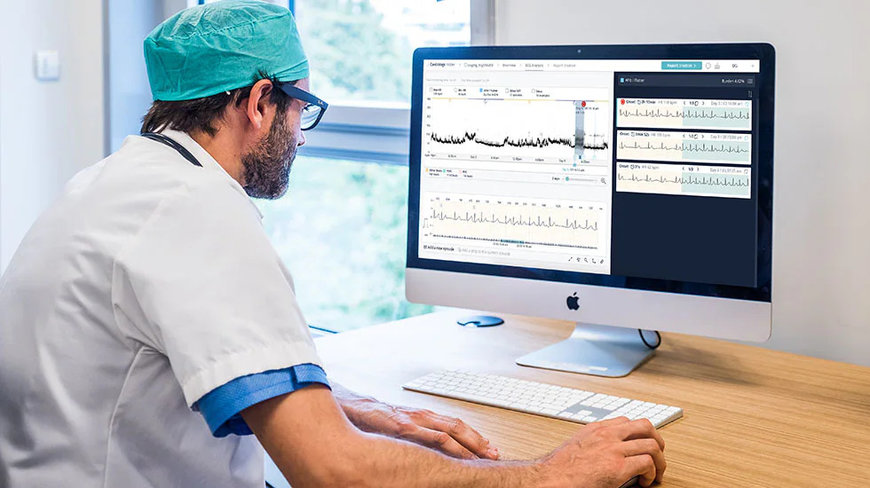
Royal Philips is presenting new retrospective study results demonstrating the clinical and economic benefits of Philips’ AI-powered cardiac care solutions at the Heart Rhythm Annual Meeting. With cardiovascular disease on the rise, clinicians and health systems continue to look for ways to deliver high-quality care that is both timely and cost-effective. Findings from the three studies highlight the central role mobile cardiac monitoring technology plays in supporting early detection of adverse cardiac events and enabling potentially life-saving interventions for patients, while helping to reduce readmissions and lower costs. Recently published in The Journal of Comparative Effectiveness Research, a Philips study compares the clinical and economic outcomes of using the Philips mobile cardiac outpatient telemetry (MCOT) wearable ECG sensor with implantable loop recorders (ILRs) in stroke patients to determine how cardiac remote monitoring technology impacts current standards of care.
This study analyzed the eighteen months following a stroke event and found that when MCOT was used instead of ILR for post-discharge monitoring
- Patients experienced significantly lower readmissions (30.2% in the MCOT-monitored group compared to 35.4% in the ILR group).
- Average cost over an 18-month period following the stroke event was reduced by USD 27,429.
- Emergency department utilization was significantly lower.
- Patients with complications and comorbidities from the index stroke experienced a higher rate of survival.
Manish Wadhwa, Chief Medical Officer for Philips Ambulatory Monitoring & Diagnostics, said: “As we explore how specific ambulatory monitoring devices, like MCOT, impact clinical outcomes, data demonstrates that choice of monitoring modality does affect the cost-effectiveness of care and patient outcomes. Effective cardiac monitoring starts with quality data, and with the AI-powered data platform behind MCOT, Philips is uniquely positioned to help care teams make quick, impactful, and cost-conscious decisions for their cardiac patients.”
Two poster presentations will highlight additional recent research showcasing Philips’ impact on improved health outcomes and AI-driven diagnosis
- Back to the Future: Artificial intelligence applied to ECG can help identify life-threatening arrhythmia events at the roots: The cause of syncope, a loss of consciousness or fainting, is difficult to diagnose and the condition leads to approximately 3% of all visits to the emergency room. Syncope may be caused by a serious heart condition and cardiac monitoring solutions are often used to detect adverse heart rate and/or rhythm events to improve how syncope patients are diagnosed and managed. AI and deep neural network (DNN) algorithms have demonstrated the ability to provide accurate medical diagnoses equivalent to human physicians or conventional algorithms. Philips’ study reveals that AI-powered ECG biomarker technology may help to identify patients with significant intermittent bradyarrhythmia, potentially improving timely diagnosis and management. Using an AI-based learning model, the study focused on successfully triaging syncope patients by identifying those who had previously experienced bradyarrhythmia.
Dr. Laurent Fiorina, Cardiovascular Institute Paris-Sud (ICPS) and medical advisor for Philips, said: “Our main focus is developing new AI models to detect cardiovascular conditions or predict future cardiac events like atrial fibrillation, ventricular tachycardia, and now, severe bradyarrhythmia.”
- The EP-COT Trial: Impact of Emergent Physician Notifications from MCOT on Patient Outcomes: While ambulatory cardiac monitors are frequently used to diagnose arrhythmias, their impact on clinical decision-making has not been extensively studied. When examining how MCOT impacts acute clinical management decisions, Dr. David Lin at the University of Pennsylvania and Dr. Mathew Hutchinson at the University of Arizona found that patients who had Emergent Notifications while wearing a Philips MCOT had a high degree of symptom-arrhythmia correlation and that these notifications were delivered to the care provider. The notifications initiated unscheduled follow-up care in over 85% of patients and a procedural intervention in over 25%, indicating MCOT’s effectiveness in detecting actionable arrhythmias and enabling care teams to intervene and provide necessary care.
Lead Management and CIED Infection
Philips will also continue to educate on cardiac implantable electronic device (CIED) infections to improve the quality of patient care by ensuring physicians are knowledgeable about CIED infection treatment and guidelines. Philips supports physicians with Lead Management solutions through a broad portfolio of tools designed for safety and predictability, including both laser and mechanical lead extraction devices to help indicated patients get the quick and effective treatment they deserve.
Visit for more information on clinical presentations by Philips.
www.philips.com
Philips will also continue to educate on cardiac implantable electronic device (CIED) infections to improve the quality of patient care by ensuring physicians are knowledgeable about CIED infection treatment and guidelines. Philips supports physicians with Lead Management solutions through a broad portfolio of tools designed for safety and predictability, including both laser and mechanical lead extraction devices to help indicated patients get the quick and effective treatment they deserve.
Visit for more information on clinical presentations by Philips.
www.philips.com

