
www.medical-devices.tech
04
'26
Written on Modified on
GE HealthCare Advances Handheld Ultrasound Capabilities Using Novel Medical Artificial Intelligence
New FDA-cleared Lung Guidance and AutoAS algorithms bring real-time scanning navigation and aortic stenosis detection directly to handheld point-of-care ultrasound devices for faster bedside triage.
www.gehealthcare.com
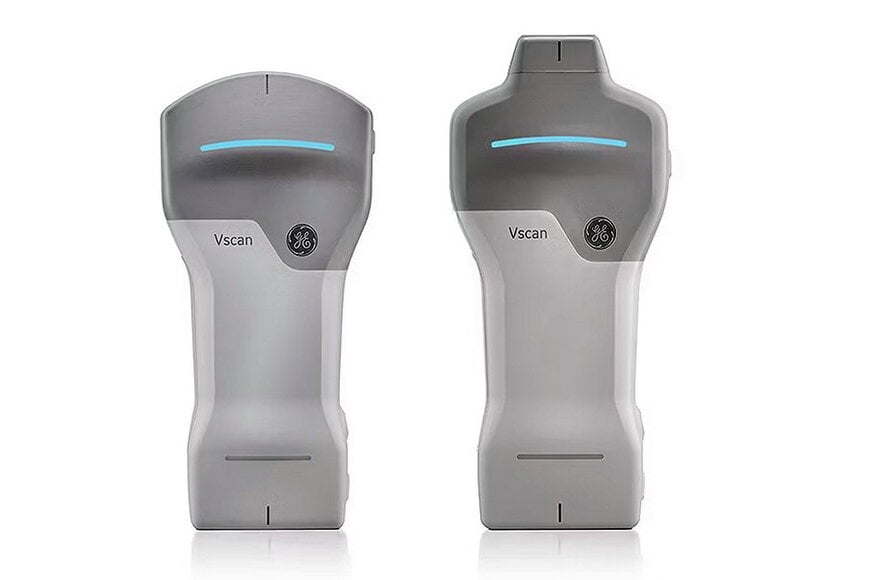
Point-of-care ultrasound diagnostic infrastructure combines deep learning guidance with portable acoustic hardware to evaluate acute cardiac and respiratory symptoms directly at patient bedsides. GE HealthCare deployed two AI applications, Lung Guidance and AutoAS, within its Vscan Air handheld system to standardize image capture protocols and clinical evaluation in urgent care environments.
Operational Challenges in Point-of-Care Diagnostics
Patients presenting acute shortness of breath frequently exhibit overlapping cardiovascular and pulmonary pathologies. In time-pressured clinical settings, conventional workflows depend on centralized echocardiography laboratories and specialist interpretation, which introduces diagnostic delays.
Portable diagnostic tools mitigate these bottlenecks, but operator-dependent variability during probe positioning and manual clip selection often compromises diagnostic yield. Standardizing image quality across non-specialist users requires automated positioning validation and real-time anatomical feature recognition.
Technical Architecture and Algorithmic Functionality
The updated Vscan Air architecture combines acoustic transducer inputs with machine learning algorithms designed for anatomical tracking and quantitative assessment:
Lung Guidance incorporates computer vision trained on standard eight-zone pulmonary protocol landmarks. The algorithm detects the pleural line, A-lines, rib shadows, the diaphragm, and the abdominal interface. Integrated AutoCapture logic triggers recording when user alignment meets predefined landmark and image-quality thresholds. If thresholds are unmet, a secondary routine captures the highest-quality frame buffer. The module executes automated B-line scoring to track interstitial fluid accumulation.
AutoAS analyzes 2D cardiac views acquired via the Vscan Air SL probe, requiring at least two echocardiographic projections among parasternal long-axis, parasternal short-axis at the aortic valve, or apical five-chamber planes. The algorithm assesses aortic valve mobility to estimate the probability of moderate-to-severe aortic stenosis, generating an automated likelihood metric alongside a statistical confidence score.
Clinical Validation and Operational Impact
In clinical validation protocols, Lung Guidance enabled non-expert operators to achieve diagnostic-quality pulmonary acquisitions with a 95.2 percent success rate, matching the 96.8 percent baseline achieved by expert sonographers.
The integration of AutoAS provides automated screening support prior to formal Doppler echocardiography, reducing operator-dependent variance in detecting valvular obstruction. Both algorithms hold U.S. Food and Drug Administration 510(k) clearance and CE mark regulatory status.
Karley Yoder, Chief Executive Officer, Ultrasound Solutions, Advanced Imaging Solutions, GE HealthCare: "Lung Guidance and AutoAS are designed to shorten the distance between the initial physical assessment and a clear next step, putting AI-enabled tools in the hands of the clinician who is already with the patient."
The software update deploys through Vscan Air Innovation Packages to complement cardiac navigation routines, delivering standardized differential imaging tools directly into emergency, critical care, and primary diagnostic workflows.
Edited by Evgeny Churilov, Induportals Media - Adapted by AI.
www.gehealthcare.com

