
www.medical-devices.tech
24
'26
Written on Modified on
Medical IP Advances 3D Printing for Surgical Simulation & Training
Automated volumetric segmentation converts radiological imaging into multimaterial tactile anatomical models for surgical planning and procedural simulation.
www.stratasys.com
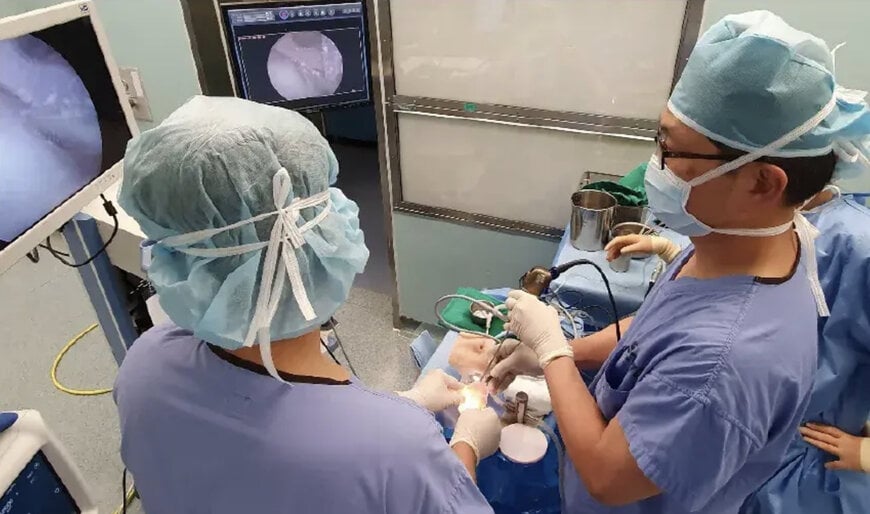
Medical IP is expanding its medical simulation and clinical training infrastructure by integrating its proprietary artificial intelligence segmentation platform with multimaterial additive manufacturing systems. The technological approach converts standard two-dimensional computed tomography and magnetic resonance scans into dimensionally accurate, haptic-feedback physical models for preoperative rehearsal, device testing, and medical education across surgical disciplines.
Clinical Limitations of Conventional Anatomical Modeling
Medical training programs and surgical departments have traditionally relied on cadaveric specimens, animal models, and single-material additive manufacturing. These traditional methods present distinct operational limitations. Animal and cadaver tissue introduce regulatory constraints, supply inconsistencies, and anatomical divergence from live human pathology. Furthermore, early-generation three-dimensional printing workflows require fabricating anatomical sub-assemblies across multiple machines to achieve different colors and durometers, necessitating labor-intensive manual assembly and post-processing that often requires over a week to complete a single multi-tissue model.
Automated Image Segmentation and Additive Production Workflow
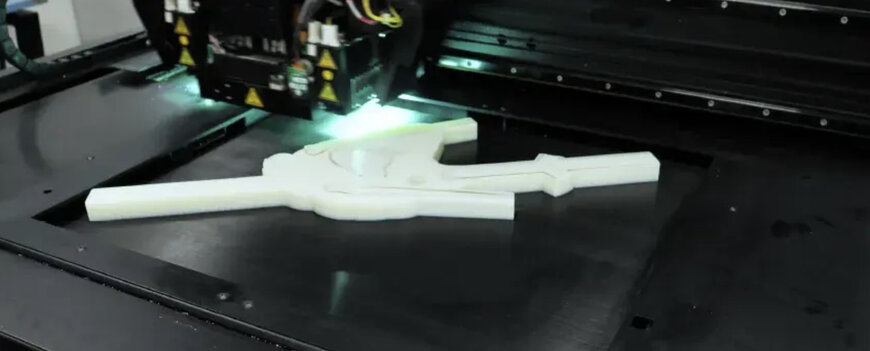
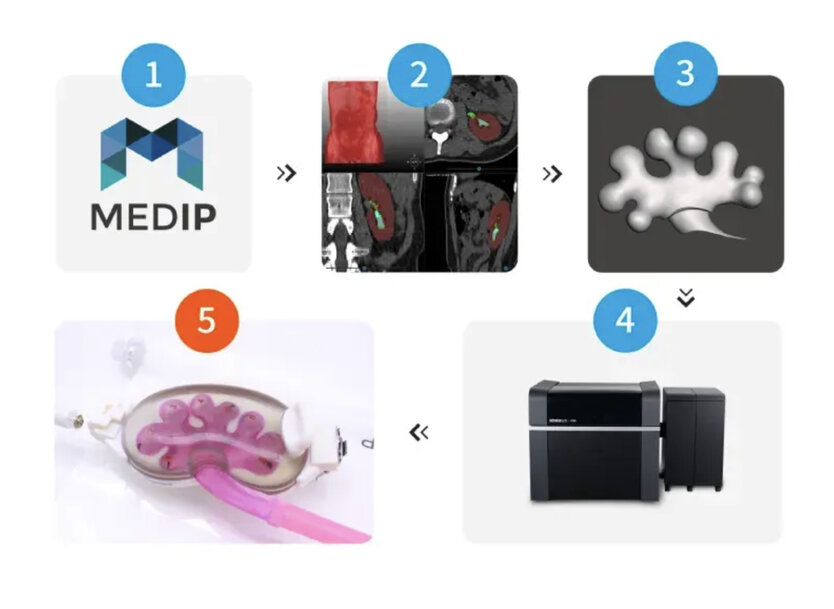
To eliminate manual reconstruction steps, Medical IP connects its MEDIP volumetric segmentation software with Stratasys J750 PolyJet additive manufacturing equipment. The end-to-end digital pipeline processes anonymized DICOM data from computed tomography, magnetic resonance, and X-ray imaging. MEDIP software extracts target tissues and structures, which are processed through the ANATDEL 3D modeling engine into stereolithography and multi-material build files. The software received regulatory clearance through the United States Food and Drug Administration (FDA) and the European CE Mark.
The PolyJet printing process simultaneously jets multiple photopolymer resins to replicate heterogeneous human tissues in a single automated print cycle. By deploying resin formulations across calibrated Shore A hardness scales alongside variable color gradients, the system replicates hard cortical bone, compliant vascular walls, parenchymal organs, and delicate neural tracts within one monolithic build. This direct multi-material deposition reduces fabrication turnaround for complex skull-base models from seven days down to 24 hours.
Surgical Validation in Skull Base and Endourological Procedures
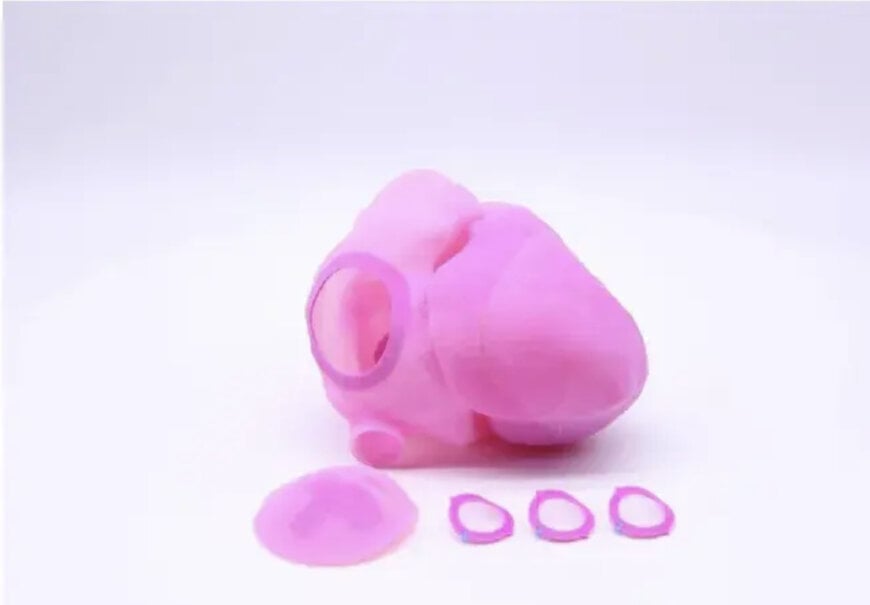
Clinical validation of the integrated platform includes transsphenoidal pituitary tumor resection simulators. Surgeons practicing on the multi-material replicas reported tactile haptic feedback during bone drilling and tissue dissection that mirrored intraoperative properties of human bone, dura mater, neural pathways, and vascular anatomy. These empirical evaluations led participating pediatric surgery teams to integrate patient-specific models into preoperative planning protocols for pediatric cases, where atypical anatomical geometry and organ dimensions heighten intraoperative risk.
In urological training, Medical IP configured a retrograde intrarenal surgery simulator for renal calculus extraction. Fabricated using translucent photopolymers, the kidney model allows simultaneous endoscopic guidance and external optical observation. Fluid circulation loops integrated into the internal collecting system permit trainees to practice laser and ultrasonic stone fragmentation under realistic continuous irrigation, delivering fluid-pressure dynamics and acoustic-haptic feedback comparable to live clinical environments.
Additional Context:
This section details technical specifications and competitive benchmarking not included in the original product announcement
Automated medical image segmentation relies on convolutional neural network architectures—primarily three-dimensional U-Net variants—to classify radiological voxel intensities into discrete anatomical structures. In industrial and clinical environments, software accuracy is measured via the Dice Similarity Coefficient (DSC) and Hausdorff Distance (HD95), with regulatory clearance requiring high spatial alignment against expert manual contours (typically DSC greater than 0.85 to 0.92 for solid organs and bone).
Within the medical additive manufacturing and image segmentation domain, Medical IP operates alongside specialized software and hardware providers:
Materialise represents the global benchmark in medical image processing and additive manufacturing preparation with the Mimics Innovation Suite (comprising Mimics Core and 3-matic). Materialise holds FDA 510(k) clearances and CE Mark certifications for anatomical modeling and surgical guide design. Its platform integrates automated deep-learning algorithms, customizable Python scripting workflows, and direct connections to industrial stereolithography (SLA) and selective laser sintering (SLS) systems.
3D Systems provides an integrated clinical modeling ecosystem through its D2P (DICOM to Print) software paired with continuous liquid interface and multi-jet printing hardware (ProJet MJP series). The platform targets rapid segmentation of radiological data with direct STL exporting, supporting point-of-care hospital manufacturing suites.
In hardware execution, the Stratasys PolyJet technology deployed by Medical IP competes against color-binder jetting (such as 3D Systems ProJet series) and multi-material stereolithography. PolyJet technology operates with a layer resolution between 14 and 27 microns, jetting liquid photopolymers cured instantly by ultraviolet light. Unlike powder-based systems that require chemical infiltration and offer limited mechanical flexibility, PolyJet systems blend liquid photopolymers (such as rigid Vero and flexible Agilus30 families) at the print-head nozzle level. This digital material mixing enables precise gradations in durometer (from Shore 30A to Shore 95A) and full-spectrum color blending, which are critical engineering requirements for reproducing distinct human tissue interfaces in a unified build envelope.
Edited by Natania Lyngdoh, Induportals editor, assisted by AI.
www.stratasys.com

