
www.medical-devices.tech
20
'26
Written on Modified on
Royal Philips Receives FDA Clearance For Next Generation Spectral CT Verida
Royal Philips introduces AI-powered spectral imaging to the United States, utilizing deep learning reconstruction and high-speed processing to enhance diagnostic precision across diverse clinical pathways.
www.philips.com
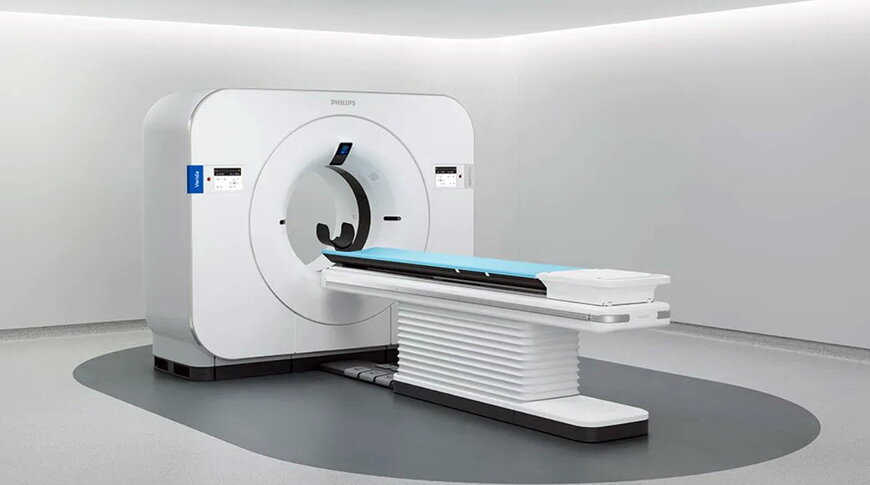
Royal Philips has secured U.S. FDA 510(k) clearance for the Spectral CT Verida, a system that redefines medical imaging standards by integrating artificial intelligence directly into the spectral imaging chain. Unlike traditional CT scanners that often require specialized protocols or repeat scans to achieve high-level tissue differentiation, the Verida system offers a distinct competitive advantage through its "always-on" dual-layer detector technology. This allows clinicians to capture both high- and low-energy data simultaneously in every scan, eliminating the workflow bottlenecks and dose inefficiencies that typically hinder spectral adoption in high-volume radiology departments.
AI-Driven Reconstruction and the Dual-Layer Advantage
The core differentiation of the Verida system lies in its hardware-software synergy. It utilizes a third-generation Nano-panel Precise dual-layer detector paired with an AI-based deep learning reconstruction engine. This combination addresses the primary limitation of many competing systems: the trade-off between image noise and diagnostic clarity. By integrating Spectral Precise Image technology, the system reduces intrinsic noise while allowing clinicians to customize de-noising levels. This ensures that the increased data density of a spectral scan does not come at the cost of image quality, providing superior material differentiation and tissue characterization that standard single-energy CT cannot match.
Redefining Throughput and Clinical Versatility
Efficiency is a critical benchmark in modern healthcare, and the Verida system is engineered to handle extreme patient volumes that often overwhelm older spectral technologies. With a reconstruction speed of 145 images per second, the system can process entire exams in under 30 seconds. This performance is twice as fast as previous iterations, enabling facilities to conduct up to 270 exams daily without compromising the depth of clinical insight. Because spectral data is available by default, there is no need for retrospective "pre-selection" of scans, which significantly reduces the rate of follow-up imaging and supports "first-time-right" diagnostic decisions.
Expanding the Role of CT Across Medical Pathways
While traditional CT is often limited by specific anatomical or diagnostic constraints, Verida is cleared for a comprehensive range of applications including oncology, cardiology, and interventional radiology. It serves as a versatile tool for everything from low-dose lung cancer screenings to complex radiation therapy planning and 4DCT respiratory-correlated scanning. By providing simultaneous conventional and spectral results, the system empowers physicians to make faster, more informed decisions across the entire patient care pathway, positioning Philips at the forefront of the shift toward more personalized and data-rich diagnostic imaging.
Edited by Evgeny Churilov, Induportals Media - Adapted by AI.
www.philips.com

