
www.medical-devices.tech
10
'26
Written on Modified on
AI Automation Simplifies Cardiac MR Planning
Philips introduces SmartHeart, an AI-based cardiac MR planning technology cleared by the U.S. FDA to automate scan setup and improve workflow consistency in cardiac imaging.
www.philips.com
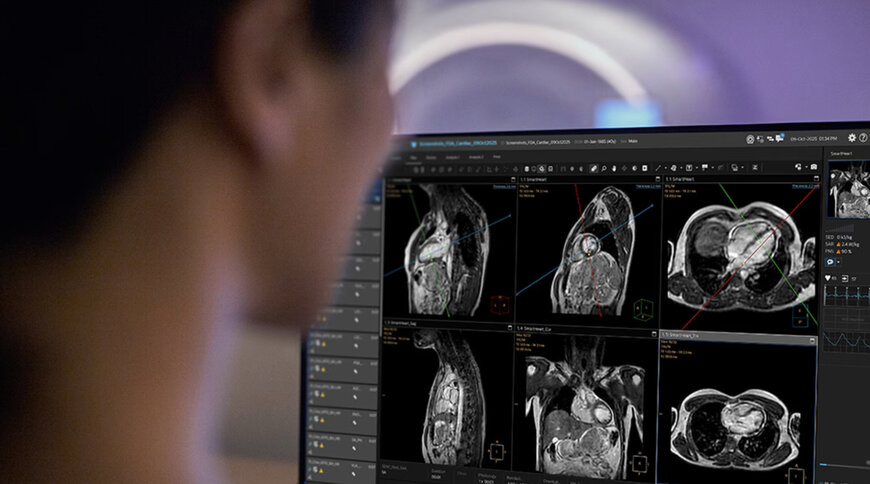
Philips has received U.S. FDA 510(k) clearance for SmartHeart, an artificial intelligence–based cardiac MR planning technology designed to automate scan preparation and improve consistency in cardiac imaging workflows. The system aims to simplify cardiac MR examinations in radiology and cardiology departments by reducing manual planning time and operator dependency.
Increasing Efficiency in Cardiac MR Imaging
Cardiac magnetic resonance (CMR) is widely used to evaluate heart structure, ventricular function, myocardial tissue characteristics, and perfusion. Despite its diagnostic value, CMR examinations typically require specialized expertise due to complex scan planning, breath-hold coordination, and patient-specific anatomical variations.
SmartHeart introduces AI-driven automation into the planning stage of cardiac MR imaging. By integrating directly into the MR workflow, the system automates scan setup with a single action and generates the required imaging views in less than 30 seconds. This automation reduces manual adjustments traditionally performed by experienced technologists.
The technology fully automates planning for 14 standard and advanced cardiac imaging views. Its AI engine was trained on more than 1,200 cardiac MR datasets, allowing it to recognize anatomical variations and support reproducible scan planning across different patient types and follow-up studies.
Addressing Workforce Constraints in Imaging Departments
Radiology departments in many healthcare systems face staffing shortages while demand for advanced imaging continues to increase. Cardiac MR, although diagnostically powerful, has historically been considered one of the most technically demanding MRI examinations.
By automating planning steps, SmartHeart reduces operator variability and standardizes scan setup. This allows technologists with varying levels of cardiac MR experience to perform examinations more consistently. As a result, imaging departments may maintain diagnostic quality while increasing exam throughput and reducing the training burden associated with specialized cardiac MR procedures.
Reducing Breath-Hold Requirements for Patients
Cardiac MR exams often require repeated breath holds to obtain motion-free images. SmartHeart reduces the number of breath holds required for basic cardiac imaging views by up to 75%.
This reduction can improve patient tolerance, particularly among individuals with dyspnea, arrhythmias, anxiety, or pediatric patients who may struggle to maintain repeated breath holds during imaging procedures. Shorter preparation times may also improve scanner utilization by decreasing total exam duration.
Part of an AI-Enabled Cardiac MR Imaging Suite
SmartHeart is part of a broader portfolio of AI-based cardiac MR technologies developed by Philips. These systems are designed to improve workflow efficiency and expand the clinical accessibility of advanced cardiac imaging.
The portfolio includes several complementary technologies. CINE FreeBreathing enables diagnostic cardiac imaging without breath holds, which is useful for patients with irregular heart rhythms or limited respiratory control. Cardiac Motion Correction (Cardiac MoCo) compensates for both respiratory and cardiac motion during acquisition, supporting improved image stability. CardiacQuant Perfusion provides quantitative analysis of myocardial perfusion using non-ionizing imaging methods, supporting the detection of subtle perfusion abnormalities.
Expanding Access to Advanced Cardiac Diagnostics
Cardiovascular disease remains a leading cause of morbidity worldwide, increasing the need for accessible diagnostic imaging tools. Expanding the availability of cardiac MR may enable earlier disease detection, more confident diagnosis, and improved monitoring of treatment outcomes.
By combining AI-based planning automation with motion correction and quantitative analysis tools, the AI-enabled cardiac MR suite from Philips aims to make cardiac MR workflows more scalable. Reduced planning complexity, fewer breath holds, and standardized imaging protocols support broader adoption of cardiac MR in clinical practice while maintaining diagnostic reliability.
Prepared with AI assistance and edited by Sucithra mani
www.philips.com

