
www.medical-devices.tech
16
'26
Written on Modified on
Flexible Pediatric MRI Coil for 3.0T Systems
Philips expands pediatric MRI capabilities with InkSpace Imaging’s Snuggle coil to improve image quality, workflow efficiency, and patient comfort in high-field clinical environments.
www.philips.com
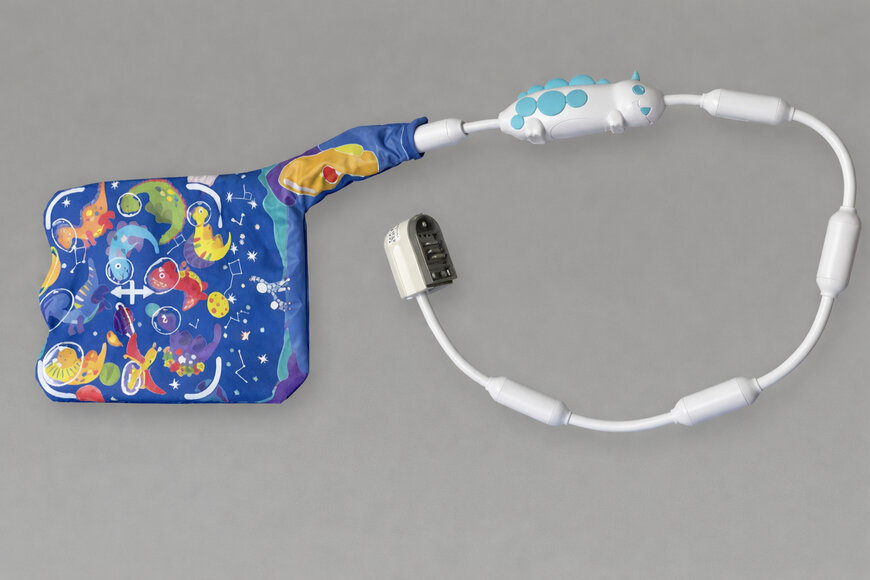
Royal Philips has introduced the Snuggle flexible pediatric MRI coil, developed by InkSpace Imaging, for use with its 3.0-tesla MR systems. The device is designed to improve imaging precision and patient handling in pediatric magnetic resonance imaging (MRI), particularly where anatomical variability and motion sensitivity affect diagnostic outcomes.
The coil addresses workflow and image-quality challenges in pediatric radiology by combining flexible geometry with high-channel design compatible with high-field 3.0T systems.
Addressing Pediatric MRI Constraints
MRI examinations in children present specific technical constraints. Smaller anatomy requires higher spatial resolution, while involuntary movement can reduce signal consistency and prolong acquisition times. Conventional rigid coils may not conform optimally to pediatric body shapes, potentially affecting signal-to-noise ratio (SNR) and workflow efficiency.
The Snuggle coil introduces a flexible architecture that adapts closely to patient anatomy. Improved conformity enhances electromagnetic coupling between the coil elements and the body region of interest, which in turn can support higher SNR and more consistent image uniformity key parameters in high-field MRI.
The device is compatible with Philips 3.0T platforms, widely used in neuroradiology, musculoskeletal imaging, and advanced pediatric diagnostics where high spatial resolution is required.
Technical Integration with 3.0T MR Systems
High-field 3.0T MRI systems offer increased intrinsic SNR compared with 1.5T systems, enabling thinner slices, faster acquisitions, or higher matrix resolution. However, these gains depend on optimized receive coil performance.
The Snuggle coil’s multi-element configuration supports parallel imaging techniques commonly used in modern MRI workflows. By enabling closer anatomical fit and stable positioning, the coil contributes to more efficient acquisition strategies, potentially reducing motion artifacts and repeat scans.
For pediatric departments, this integration supports:
- Neurological imaging requiring high-resolution brain studies
- Musculoskeletal assessments in smaller anatomical regions
- Abdominal or torso imaging where coil adaptability affects coverage and comfort
Workflow and Patient Comfort
Beyond image quality, pediatric MRI workflows are influenced by preparation time and patient cooperation. Flexible coil design can simplify positioning and reduce the need for repositioning during the scan. In pediatric imaging, improved comfort may also reduce sedation requirements in certain cases, although sedation protocols remain institution-dependent.
From a digital workflow perspective, integration within the broader MRI ecosystem supports streamlined setup and consistent imaging protocols across sites operating Philips 3.0T platforms.
Market and Clinical Context
Flexible and anatomically adaptive coils represent a broader trend in MRI hardware development, particularly in pediatric and specialty imaging segments. Compared with traditional rigid coil assemblies, flexible coils are evaluated based on measurable criteria such as SNR performance, channel count, anatomical coverage, and compatibility with parallel imaging acceleration factors.
Within this context, the Snuggle coil expands Philips’ pediatric MRI portfolio by addressing mechanical adaptability and imaging performance simultaneously, aligning with the increasing demand for precision imaging in pediatric radiology.
Conclusion
The introduction of the Snuggle flexible pediatric MRI coil for Philips 3.0T MR systems reflects continued hardware innovation in high-field imaging. By combining adaptable coil geometry with multi-element performance, the solution targets measurable improvements in SNR, workflow efficiency, and patient handling in pediatric MRI applications.
The development supports hospitals seeking enhanced imaging precision within established 3.0T clinical infrastructures.
www.philips.com
Beyond image quality, pediatric MRI workflows are influenced by preparation time and patient cooperation. Flexible coil design can simplify positioning and reduce the need for repositioning during the scan. In pediatric imaging, improved comfort may also reduce sedation requirements in certain cases, although sedation protocols remain institution-dependent.
From a digital workflow perspective, integration within the broader MRI ecosystem supports streamlined setup and consistent imaging protocols across sites operating Philips 3.0T platforms.
Market and Clinical Context
Flexible and anatomically adaptive coils represent a broader trend in MRI hardware development, particularly in pediatric and specialty imaging segments. Compared with traditional rigid coil assemblies, flexible coils are evaluated based on measurable criteria such as SNR performance, channel count, anatomical coverage, and compatibility with parallel imaging acceleration factors.
Within this context, the Snuggle coil expands Philips’ pediatric MRI portfolio by addressing mechanical adaptability and imaging performance simultaneously, aligning with the increasing demand for precision imaging in pediatric radiology.
Conclusion
The introduction of the Snuggle flexible pediatric MRI coil for Philips 3.0T MR systems reflects continued hardware innovation in high-field imaging. By combining adaptable coil geometry with multi-element performance, the solution targets measurable improvements in SNR, workflow efficiency, and patient handling in pediatric MRI applications.
The development supports hospitals seeking enhanced imaging precision within established 3.0T clinical infrastructures.
www.philips.com

