
www.medical-devices.tech
19
'25
Written on Modified on
How a riding simulator helps sick and disabled people
The therapy device, featuring a KR QUANTEC robot from KUKA, precisely mimics the movement of a horse's back when walking, thereby replicating the exact movement pattern used in hippotherapy.
www.kuka.com
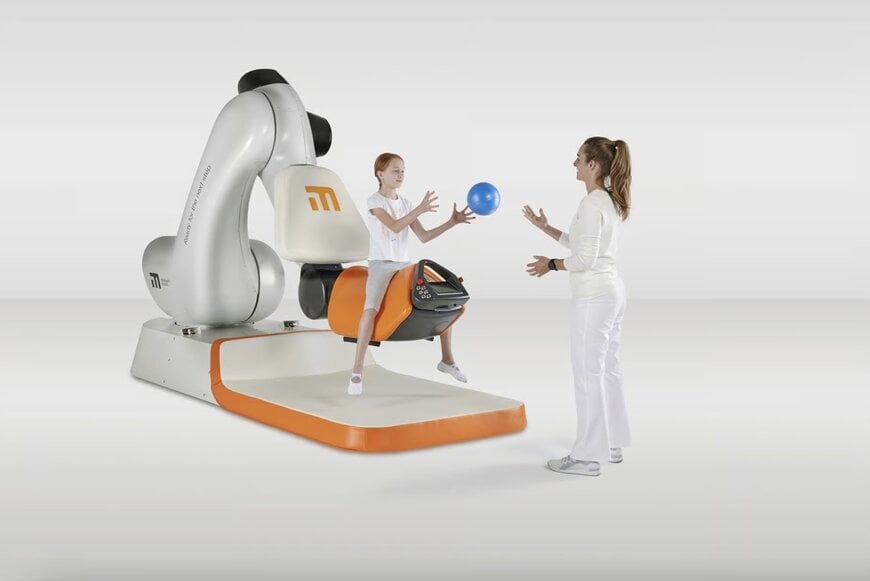
The “hirob” rehabilitation robot from the Austrian company intelligent motion was developed specifically for clinical settings. The therapy device, which features a KR QUANTEC robot from KUKA, precisely mimics the movement of a horse's back when walking, thereby replicating the exact movement pattern used in hippotherapy. In addition, it is possible to adjust the intensity and speed, as well as the form of movement, for example, to allow the pelvis to tilt or circle only.
Alleviating symptoms, improving mobility
The patient sits on an ergonomic seat modeled on a saddle and must actively respond to the robot's movements. This training helps to stabilize the torso, mobilize the pelvis, reduce spasms, and improve balance. In addition, muscle stimulation can induce so-called neuroplasticity in the brain, which helps to relearn lost motor functions.
This enables patients to regain mobility after strokes or traumatic brain injuries, for example, or in cases of serious illnesses such as multiple sclerosis. Symptoms of pelvic floor weakness or incontinence can also be improved.
“By precisely replicating the movement impulses of a horse, hirob enables us to specifically promote motor learning through sensory stimulation and acti-vation of central nervous control processes. hirob thus optimally complements the therapeutic spectrum in neurological and musculoskeletal rehabilitation with a standardizable, evidence-based method,” said Lara Leutgeb, research associate at intelligent motion.
Robotic hippotherapy, ready to use and individually adapted
In hippotherapy, patients are usually first accustomed to the animals and then placed safely on the horse under supervision. The patients are led at walking pace, and the horse's movement has a positive effect on balance, motor skills, and movement patterns.
Robotic hippotherapy brings these benefits directly to patients undergoing rehabilitation treatment in hospitals, rehabilitation, and physical therapy centers - thanks to innovative technology.
www.kuka.com

