
www.medical-devices.tech
07
'26
Written on Modified on
Domestic Medical Manufacturing Expands to Strengthen Healthcare Supply Chains
BD partnered with the U.S. government to expand domestic production of essential medical consumables across national healthcare supply chains.
www.bd.com
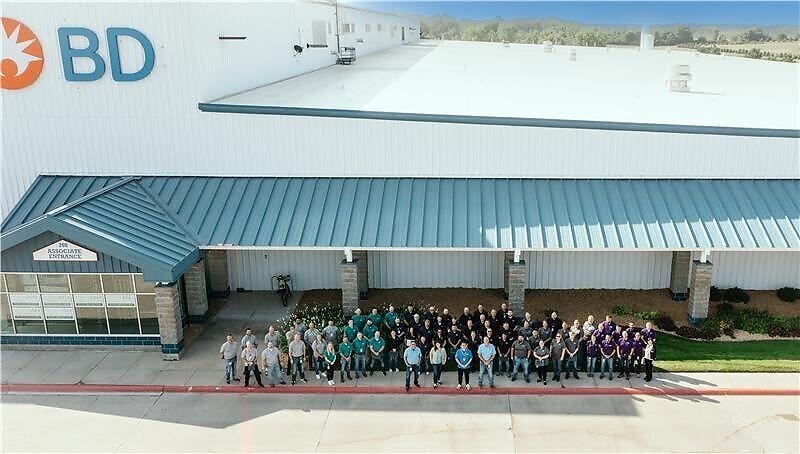
Global logistics bottlenecks, raw material shortages, and geopolitical shifts have exposed vulnerabilities in hospital procurement pipelines, where single-source overseas dependencies frequently risk patient care disruptions. Addressing the operational imperative for domestic supply-chain security, medical technology manufacturer BD (Becton, Dickinson and Company) formed a partnership with the U.S. government to scale domestic manufacturing infrastructure for high-turnover medical consumables used in approximately 90% of U.S. hospital admissions.
Capital Allocation and Production Scaling Parameters
The bilateral initiative establishes an overall capital commitment of $19 billion distributed over several years across BD operational, research, and supply-chain operations within the United States. A dedicated $3 billion segment of this capital expenditure directly funds manufacturing expansion at strategic domestic production sites.
The primary engineering deliverable targets an output expansion of approximately 5 billion essential medical consumables annually. This capacity increase elevates BD domestic production share to roughly 80% of its consumables distributed to the U.S. healthcare sector. A central manufacturing mandate requires 100% of BD needles utilized in American healthcare settings to be fabricated domestically using American-sourced stainless steel alloys.
Operational Architecture Across Strategic Production Facilities
Implementing end-to-end consumable fabrication requires coordinated tooling, precision high-speed molding, cannula drawing, automated assembly, and high-throughput terminal sterilization. BD distributes these operations across existing manufacturing sites, including facilities in Columbus and Broken Bow, Nebraska; Canaan, Connecticut; Añasco, Puerto Rico; Sandy, Utah; El Paso, Texas; Covington, Georgia; and Sumter, South Carolina.
Decoupling the supply chain from offshore fabrication mitigates transit latencies and raw material bottlenecks. To maintain operational continuity while production capacity scales, the framework establishes relief mechanisms against future tariffs levied under Section 232 of the Trade Expansion Act on covered BD components, inputs, and medical consumables. Implementation remains contingent on the finalized scope of future Section 232 administrative actions and verified achievement of production milestones, offering long-term planning certainty across capital equipment procurement and domestic supplier networks.
Tom Polen, Chairman, CEO, and President of BD, noted that the agreement establishes a shared commitment to national healthcare infrastructure, utilizing the company's production footprint to build long-term operational resilience.
Additional Context:
This section details technical specifications and competitive benchmarking not included in the original product announcement.
Essential medical consumables, specifically hypodermic needles, peripheral intravenous catheters (PIVCs), syringes, and blood collection systems, operate under strict regulatory and dimensional standards, including ISO 7864 for sterile hypodermic needles, ISO 7886 for single-use hypodermic syringes, and ISO 10555 for intravascular catheters. Hypodermic needle production requires drawing surgical-grade austenitic stainless steel (primarily AISI 304 or 316L) into precise outer diameter tolerances, grinding multi-beveled lancet points to minimize tissue penetration force, and applying micron-level silicone coatings to reduce insertion friction.
The domestic medical consumables landscape includes competing high-volume manufacturers such as Terumo Corporation, Cardinal Health, and ICU Medical (which integrated Smiths Medical). While Terumo operates U.S. manufacturing facilities for specialty needles and vascular access devices, substantial portions of the global commodity consumable market remain concentrated in East Asia, Latin America, and Southeast Asia to minimize unit labor and plastic resin costs.
Transitioning needle fabrication fully to American-made steel addresses vulnerabilities highlighted by the U.S. Food and Drug Administration (FDA) regarding device failures and foreign material contamination observed in imported syringe and needle imports. Producing 5 billion units domestically each year requires heavy integration of high-cavitation injection molding systems, vision-inspection optical metrology operating at thousands of parts per minute, and localized ethylene oxide (EtO) or radiation sterilization capacity designed to comply with tightened Environmental Protection Agency (EPA) emissions rules.
Edited by Natania Lyngdoh, Induportals editor, with AI assistance.
www.bd.com

