
www.medical-devices.tech
07
'26
Written on Modified on
Industrial Automation Enhances Manufacturing Efficiency
Optimizing Production Lines at ZF Friedrichshafen with Advanced Robotics and Industrial Automation Systems.
www.fanuc.eu
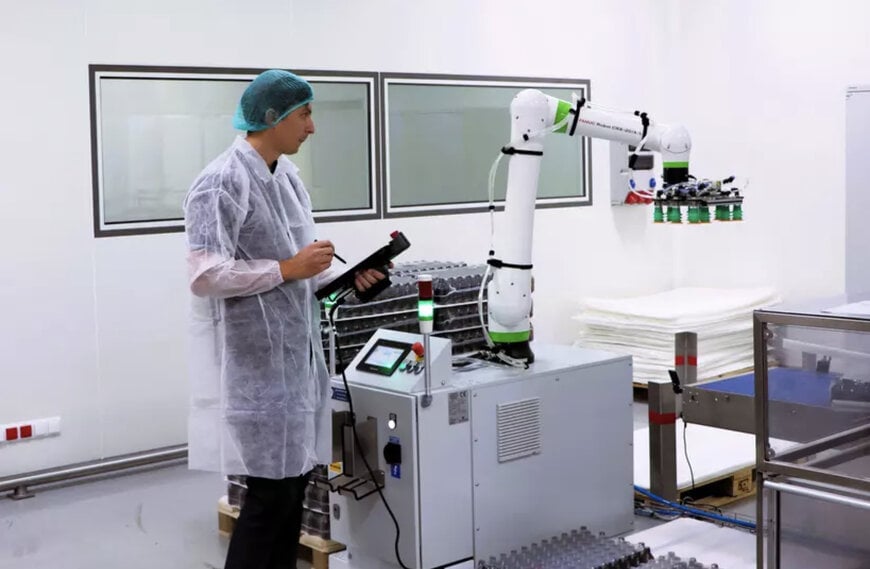
Industrial automation and manufacturing sector applications are undergoing a critical transformation as companies strive to upgrade aging legacy infrastructure and maximize throughput. At its advanced production facility in Friedrichshafen, Germany, technology enterprise ZF Friedrichshafen faced persistent bottlenecks in component assembly due to mechanical wear and constrained cycle times on legacy production lines. These operational roadblocks limited overall plant productivity and created maintenance backlogs that affected delivery schedules.
Operational Challenges and Production Goals
The primary objective for ZF Friedrichshafen was to eliminate assembly delays and reduce unplanned downtime caused by aging multi-axis positioning equipment. Plant engineers identified that manual intervention points and slow mechanical transfer speeds were restricting throughput. The core goals for improvement included increasing unit assembly velocity, enhancing positional repeatability under continuous operational loads, and lowering overall energy consumption per processed batch.
Technical Solution and Implementation
To address these requirements, the company deployed modular articulated robots integrated with programmable logic controllers and real-time bus communication architecture. This technical configuration was selected because its closed-loop servo feedback mechanism guarantees high path accuracy under heavy payloads. The system provider supported the deployment through digital twin simulation software, which modeled collision paths and validated control code prior to physical installation on the shop floor.
Measurable Results and Operational Impact
The deployment of the automated multi-axis robotic cells yielded immediate improvements in operational performance. Cycle times for complex assembly sequences decreased by 25 percent, while positional accuracy improved to within hundredths of a millimeter. Furthermore, the integration of energy-regenerative braking drives on the robotic axes reduced electrical power draw during deceleration phases, contributing to lower facility energy overhead and consistent, predictable manufacturing output.
Edited by Sucithra Mani, Induportals editor – adapted by AI.
www.fanuc.com

