
www.medical-devices.tech
05
'26
Written on Modified on
Electrospun Membrane Wound Dressings for Chronic Infection Treatment
Fraunhofer IKTS develops specialized dressings designed to address chronic wounds, improve healing outcomes and offer new approaches to infection prevention.
www.fraunhofer.de
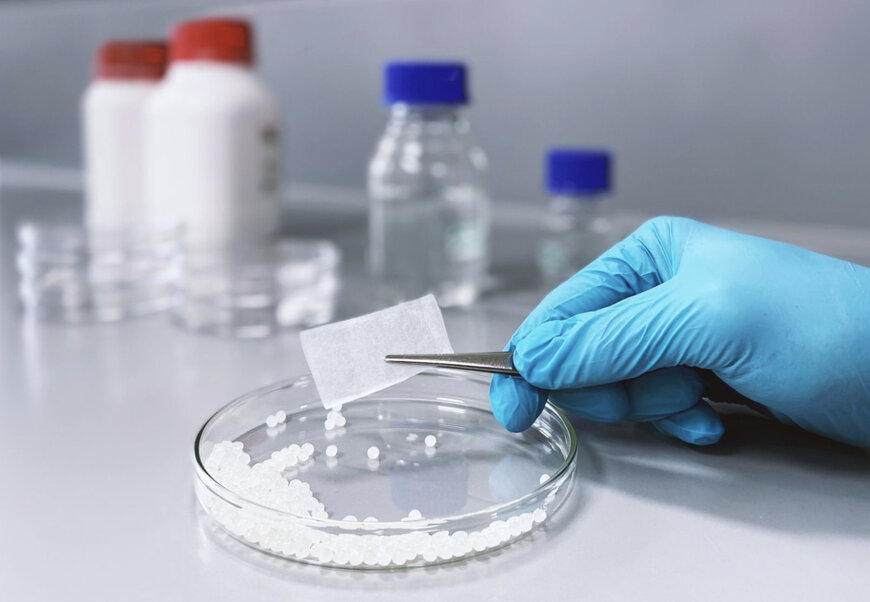
© Fraunhofer IKTS: At Fraunhofer IKTS, innovative dressings are electrospun from polylactic acid (PLA), a polymer that breaks down in the body. Specially incorporated active ingredients provide long-term improvements in wound healing and effectively prevent wound infection.
Chronic wound management poses a severe operational and clinical challenge in healthcare systems, particularly for patients suffering from microvascular complications related to diabetes, peripheral artery disease, and pressure ulcers. The Fraunhofer Institute for Ceramic Technologies and Systems IKTS, operating through its Bio- and Medical Technology business unit in Dresden, is actively engineering multi-component electrospun membrane dressings under the international research initiative AntiMicroMXen to address non-healing tissue injuries and escalating antimicrobial resistance.
Clinical Economics and the Engineering Challenge in Chronic Wound Care
In Germany alone, approximately one million patients undergo medical intervention for non-healing chronic wounds originating from impaired circulatory mechanisms, decubitus ulcers, and diabetic foot syndrome. The associated healthcare expenditure reaches roughly 7.5 billion euros each year. Traditional wound dressings rely largely on passive moisture barrier management or single-agent topical antimicrobials, which often fail to eradicate resistant biofilm-forming pathogens or stimulate cellular proliferation.
To bypass systemic antibiotic dependencies, researchers are directing therapeutic materials toward active, multi-pathway intervention directly at the wound bed. The AntiMicroMXen initiative combines target-specific biological agents with regenerative proteins and nanomaterials into a singular, multifunctional wound dressing substrate capable of localized release.
Electrospinning Mechanism for Temperature-Sensitive Biomaterial Scaffolds
The core fabrication method relies on the electrospinning of polymer solutions, a micro- and nanofiber production technique that avoids high-temperature thermal processing. A liquid polymer feed is metered into a precision syringe and extruded into a high-voltage electrostatic field. As electrostatic repulsion overcomes the surface tension of the polymer droplet, an electrified fluid jet accelerates toward a collector, depositing microscale and nanoscale nonwoven fibers. The continuous accumulation of these microfilaments yields a flexible, handkerchief-like membrane structurally analogous to the native extracellular matrix.
Because proteins and bacteriophages denature under elevated temperatures, the ambient thermal profile of electrospinning preserves the tertiary structural integrity of biologically active elements. However, the presence of high electric fields mandates post-process verification to ensure the structural survival and bioactivity of embedded therapeutic components.
Tri-Functional Active Material Architecture
The multi-layer scaffold integrates three distinct functional agents designed to target complementary phases of the wound healing cascade:
Chronic wound management poses a severe operational and clinical challenge in healthcare systems, particularly for patients suffering from microvascular complications related to diabetes, peripheral artery disease, and pressure ulcers. The Fraunhofer Institute for Ceramic Technologies and Systems IKTS, operating through its Bio- and Medical Technology business unit in Dresden, is actively engineering multi-component electrospun membrane dressings under the international research initiative AntiMicroMXen to address non-healing tissue injuries and escalating antimicrobial resistance.
Clinical Economics and the Engineering Challenge in Chronic Wound Care
In Germany alone, approximately one million patients undergo medical intervention for non-healing chronic wounds originating from impaired circulatory mechanisms, decubitus ulcers, and diabetic foot syndrome. The associated healthcare expenditure reaches roughly 7.5 billion euros each year. Traditional wound dressings rely largely on passive moisture barrier management or single-agent topical antimicrobials, which often fail to eradicate resistant biofilm-forming pathogens or stimulate cellular proliferation.
To bypass systemic antibiotic dependencies, researchers are directing therapeutic materials toward active, multi-pathway intervention directly at the wound bed. The AntiMicroMXen initiative combines target-specific biological agents with regenerative proteins and nanomaterials into a singular, multifunctional wound dressing substrate capable of localized release.
Electrospinning Mechanism for Temperature-Sensitive Biomaterial Scaffolds
The core fabrication method relies on the electrospinning of polymer solutions, a micro- and nanofiber production technique that avoids high-temperature thermal processing. A liquid polymer feed is metered into a precision syringe and extruded into a high-voltage electrostatic field. As electrostatic repulsion overcomes the surface tension of the polymer droplet, an electrified fluid jet accelerates toward a collector, depositing microscale and nanoscale nonwoven fibers. The continuous accumulation of these microfilaments yields a flexible, handkerchief-like membrane structurally analogous to the native extracellular matrix.
Because proteins and bacteriophages denature under elevated temperatures, the ambient thermal profile of electrospinning preserves the tertiary structural integrity of biologically active elements. However, the presence of high electric fields mandates post-process verification to ensure the structural survival and bioactivity of embedded therapeutic components.
Tri-Functional Active Material Architecture
The multi-layer scaffold integrates three distinct functional agents designed to target complementary phases of the wound healing cascade:
- Antibacterial Bacteriophages: Cultured in specialized laboratory setups or isolated from clinical wastewater environments, these host-specific lytic viruses specifically target and eradicate pathological bacterial strains without contributing to conventional antibiotic resistance mechanisms.
- Cell-Proliferation Proteins: Incorporated bioactive factors directly promote keratinocyte and fibroblast migration, stimulating tissue regeneration and accelerating primary wound closure.
- Two-Dimensional MXenes: These transition metal carbides, nitrides, or carbonitrides act as inorganic antiseptic agents. When positioned near the outer membrane boundary and subjected to targeted irradiation, MXenes generate photothermal responses that eliminate broad-spectrum pathogens.
Engineering constraints dictate spatial segregation within the electrospun nonwoven structure. Biological agents such as bacteriophages and regenerative growth proteins exhibit high susceptibility to environmental shifts, including surrounding pH variations and thermal degradation. Consequently, process parameters are calibrated to encapsulate them densely within the interior core of the electrospun polymer fibers. Conversely, MXenes require direct optical and physical exposure to external excitation, requiring concentration toward the outer surface of the membrane.
Project Scope, Timeline, and Cross-Industry Utilization
The AntiMicroMXen consortium operates under the formal project title Electrospun scaffolds with antimicrobial and wound-healing capabilities utilizing bacteriophages, mesenchymal stem cell-derived factors and MXenes. Fraunhofer IKTS leads the consortium as coordinator alongside international research and industry entities, including the Hirszfeld Institute of Immunology and Experimental Therapy at the Polish Academy of Sciences, the University of Latvia, and NanoCarbonTech of Poland.
The initiative is funded by the Sächsische Aufbaubank, the Saxon State Ministry for Science, Culture and Tourism, and the European Union through the M-ERA.NET framework. Scheduled across a project duration running from June 2024 to May 2027, the investigative scope covers individual active material synthesis, bioactivity validation, single-agent matrix blending, and multi-agent composite spinning. Beyond medical wound management, the underlying multi-agent fiber technology provides transferable surface-protection mechanics for food packaging systems to neutralize common foodborne pathogens like Salmonella.
Additional Context:
This section details technical specifications and competitive benchmarking not included in the original product announcement.
Electrospun scaffolds in biomedical applications are predominantly benchmarked against commercial silver-impregnated polyurethane foams, hydrocolloids, and basic electrospun collagen or polycaprolactone (PCL) meshes. Conventional silver dressings release ionic silver (Ag+) to achieve broad-spectrum bactericidal activity; however, unmanaged silver ion concentrations can demonstrate cytotoxicity toward human keratinocytes and delay granulation tissue formation.
Under the M-ERA.NET research framework, the AntiMicroMXen platform incorporates biodegradable carrier matrices such as polylactic acid (PLA) to achieve controlled in situ bio-absorption. Biological activity targets include multi-drug-resistant Staphylococcus aureus, evaluated through lytic phage release kinetics coupled with secretome factors derived from human adipose tissue mesenchymal stem cells (HATMSC).
Titanium carbide MXene flakes (such as Ti3C2Tx) exhibit high near-infrared (NIR) light-to-heat conversion efficiency, offering localized photothermal pathogen disruption without chemical resistance development. Regulatory certification pathways for clinical deployment must comply with European Medical Device Regulation (EU) 2017/745 (MDR) standards for Class III medical devices containing integral medicinal substances, as well as ISO 10993 standards governing medical device biocompatibility.
Edited by Natania Lyngdoh, Induportals editor, with AI assistance.
www.fraunhofer.com
Project Scope, Timeline, and Cross-Industry Utilization
The AntiMicroMXen consortium operates under the formal project title Electrospun scaffolds with antimicrobial and wound-healing capabilities utilizing bacteriophages, mesenchymal stem cell-derived factors and MXenes. Fraunhofer IKTS leads the consortium as coordinator alongside international research and industry entities, including the Hirszfeld Institute of Immunology and Experimental Therapy at the Polish Academy of Sciences, the University of Latvia, and NanoCarbonTech of Poland.
The initiative is funded by the Sächsische Aufbaubank, the Saxon State Ministry for Science, Culture and Tourism, and the European Union through the M-ERA.NET framework. Scheduled across a project duration running from June 2024 to May 2027, the investigative scope covers individual active material synthesis, bioactivity validation, single-agent matrix blending, and multi-agent composite spinning. Beyond medical wound management, the underlying multi-agent fiber technology provides transferable surface-protection mechanics for food packaging systems to neutralize common foodborne pathogens like Salmonella.
Additional Context:
This section details technical specifications and competitive benchmarking not included in the original product announcement.
Electrospun scaffolds in biomedical applications are predominantly benchmarked against commercial silver-impregnated polyurethane foams, hydrocolloids, and basic electrospun collagen or polycaprolactone (PCL) meshes. Conventional silver dressings release ionic silver (Ag+) to achieve broad-spectrum bactericidal activity; however, unmanaged silver ion concentrations can demonstrate cytotoxicity toward human keratinocytes and delay granulation tissue formation.
Under the M-ERA.NET research framework, the AntiMicroMXen platform incorporates biodegradable carrier matrices such as polylactic acid (PLA) to achieve controlled in situ bio-absorption. Biological activity targets include multi-drug-resistant Staphylococcus aureus, evaluated through lytic phage release kinetics coupled with secretome factors derived from human adipose tissue mesenchymal stem cells (HATMSC).
Titanium carbide MXene flakes (such as Ti3C2Tx) exhibit high near-infrared (NIR) light-to-heat conversion efficiency, offering localized photothermal pathogen disruption without chemical resistance development. Regulatory certification pathways for clinical deployment must comply with European Medical Device Regulation (EU) 2017/745 (MDR) standards for Class III medical devices containing integral medicinal substances, as well as ISO 10993 standards governing medical device biocompatibility.
Edited by Natania Lyngdoh, Induportals editor, with AI assistance.
www.fraunhofer.com

