
www.medical-devices.tech
21
'26
Written on Modified on
ARPA-H Awards Siemens Healthineers $31M for Stroke Robotics
The five-year funding aims to advance autonomous remote endovascular robotics for mechanical thrombectomy with partner Stryker.
www.siemens-healthineers.com
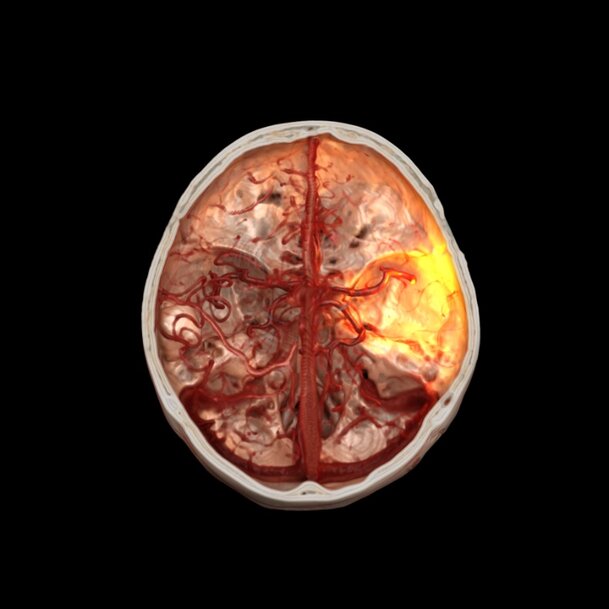
The Advanced Research Projects Agency for Health (ARPA-H) has awarded Siemens Healthineers up to $31.1 million over five years to accelerate the development of autonomous remote endovascular robotics. This technology is designed to enable robots to perform long-distance treatment of acute ischemic stroke through mechanical thrombectomy without direct human input.
With an additional $5.4 million cost share from Siemens Healthineers, the total combined investment in the project could reach $36.5 million. Stryker is acting as a sub-awardee under the grant, advancing a strategic partnership established by the two companies in 2025 to drive innovation in robotic neurovascular interventions.
According to Philipp Fischer, head of Advanced Therapies at Siemens Healthineers, the investment is a major step toward transforming endovascular therapy delivery by making it more accessible and precise across a broader range of care settings. Jim Marucci, president of Stryker’s Neurovascular division, added that the collaboration aims to overcome geographical treatment barriers and bring advanced stroke care closer to more patients and communities.
Additional Context
This section provides technological and market background not explicitly detailed in the original release.
The funding is part of ARPA-H's Autonomous Interventions and Robotics (AIR) program, which seeks to redefine surgical care by developing systems that can navigate complex anatomy and perform interventions autonomously. Currently, mechanical thrombectomy is a highly effective, minimally invasive procedure for restoring blood flow to the brain, but it remains heavily restricted to comprehensive stroke centers. In the United States, more than half of the population lives over an hour away from a capable clinic, meaning only about 12% of the 335,000 eligible stroke patients receive the procedure each year. To bridge this gap, Siemens Healthineers is developing the ARIES (Autonomous Robotics and Imaging Ecosystem for Stroke) platform. This system will integrate a robotic catheter drive platform with autonomy-optimized endovascular devices, fluoroscopic imaging, and parallel algorithms for physics- and reinforcement learning-based navigation, aiming to democratize access to life-saving care regardless of a patient's geographic location.
Edited by Lekshman Ramdas, Induportals editor – adapted by AI.
www.siemens-healthineers.com

