
www.medical-devices.tech
22
'26
Written on Modified on
Real-Time AI Surgical Computing Platform Architecture and Clinical Applications
Medtronic integrates accelerated computing to process live video feeds and enable concurrent intraoperative artificial intelligence applications during robotic and laparoscopic surgical procedures.
www.medtronic.com
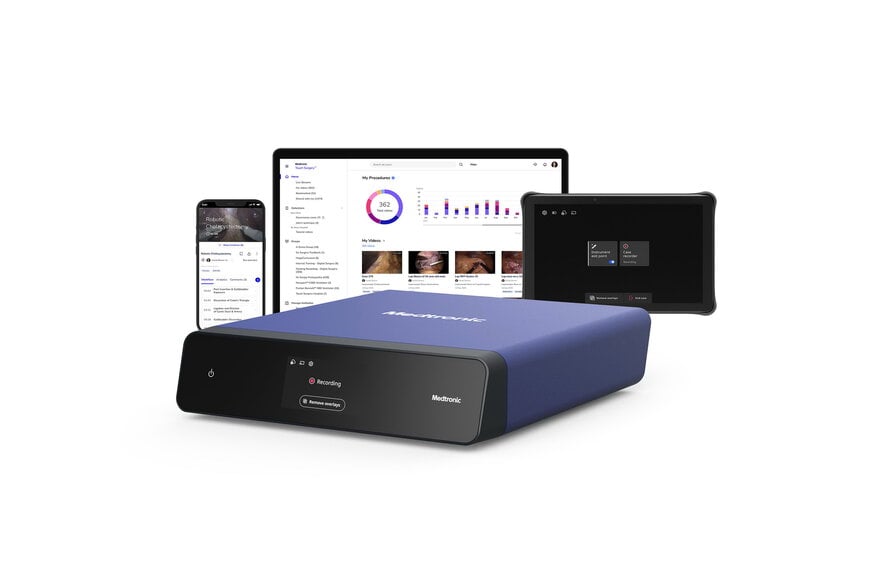
Medtronic has developed Touch Surgery Aide, an edge computing platform leveraging Nvidia hardware and software architecture to execute real-time surgical AI algorithms in operating rooms. The system processes high-definition intraoperative video and procedural context to support clinical decision-making during robotic-assisted and laparoscopic procedures across urology, gynecology, and general surgery.
Edge Computing Infrastructure for Multimodal Surgical Data
The Touch Surgery Aide platform expands on existing surgical ecosystem infrastructure currently installed in over 1,500 operating rooms globally. By integrating Nvidia Holoscan, CUDA, and TensorRT software frameworks alongside hardware acceleration, the platform processes incoming surgical video streams with low latency. This processing stack allows multiple multimodal computer vision algorithms to run concurrently during live procedures without delay in output rendering.
The architecture connects pre-operative planning tools, intra-operative tele-mentoring streams, and post-operative case video analytics. By performing inference directly within the local operating room environment, the edge platform eliminates cloud latency, enabling instantaneous data processing for continuous intraoperative feedback.
Real-Time Computer Vision and Clinical Applications
The initial application running on the Touch Surgery Aide framework is Instrument Exit Point, a computer vision tool designed for the Hugo robotic-assisted surgery system. The software tracks surgical tools in real time and provides visual notifications on the primary console display when selected instruments extend beyond the camera field of view. This notification mechanism mitigates the risk of unintended tissue interaction outside the surgeon's visual field.
According to technical leadership at Medtronic, real-time edge processing represents a shift from mechanical tool assistance toward computerized workflow optimization, providing surgical teams with real-time procedural telemetry. Future application modules planned for the platform include automated surgical phase recognition, anatomical structure segmentation, and expanded compatibility with standard laparoscopic imaging stacks.
Regulatory Approvals and Platform Integration
The Instrument Exit Point application received clearance from the U.S. Food and Drug Administration (FDA) for use with the Hugo system. This clearance follows broader regulatory milestones for the Hugo platform, including FDA clearance for urologic surgical procedures obtained in December 2025, and 510(k) submissions filed in June 2026 for general and gynecologic surgical indications.
The hardware and software platform is being demonstrated at the Society of Robotic Surgery Annual Meeting in Florida, taking place July 23–26, 2026. The deployment strategy focuses on standardizing surgical data collection across global hospital networks, converting live procedural video into structured clinical insights.
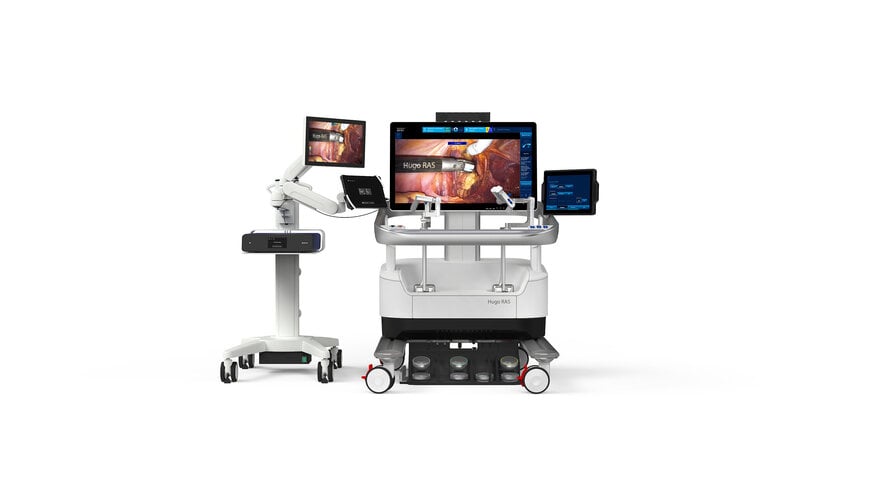
Hugo(TM) Robotic Assisted Surgery system console and Touch Surgery(TM) ecosystem with the next-generation compute platform Touch Surgery(TM) Aide
Additional Context: Technical Specifications and Competitive Benchmarking
The integration of Nvidia Holoscan into surgical edge hardware places Medtronic within a growing class of real-time intraoperative computing systems. Comparable platforms in the robotic and computer-assisted surgery sector include the Intuitive Surgical digital ecosystem, featuring the dV-Connect and Intuitive Hub infrastructure, as well as standalone surgical AI edge platforms such as Caresyntax and Asensus Surgical Performance-Guided Surgery (PGS).
In terms of compute architecture, Medtronic Touch Surgery Aide relies on Nvidia Holoscan, TensorRT, and CUDA frameworks to execute intraoperative edge processing. By contrast, Intuitive Surgical uses proprietary embedded compute hardware to handle system telemetry and video processing, while Caresyntax utilizes vendor-agnostic edge hardware designed to integrate video, audio, and electronic health record data streams.
Processing deployment and primary data handling vary across these architectures. Medtronic Touch Surgery Aide and Caresyntax both prioritize localized intraoperative edge processing to eliminate cloud latency during active procedures. Intuitive Surgical employs a hybrid approach, combining real-time intraoperative processing with cloud-based post-case analytics.
Safety and functional applications highlight different design goals across platforms. Medtronic's initial deployment, Instrument Exit Point, focuses on tracking surgical tools moving beyond the camera field of view to prevent unseen tissue damage. Intuitive Surgical emphasizes system safety boundaries and robotic telemetry feedback, whereas Caresyntax focuses on real-time procedural phase tracking and workflow optimization.
Regarding hardware compatibility, Medtronic Touch Surgery Aide supports the Hugo robotic-assisted surgery system with planned extension to standard laparoscopic imaging stacks. Intuitive Surgical operates as a closed ecosystem dedicated to da Vinci and Ion robotic platforms, while Caresyntax provides open compatibility across open, laparoscopic, and third-party robotic systems.
While conventional surgical recording systems rely on cloud processing for post-operative video analytics, edge compute platforms built on TensorRT and Holoscan achieve pipeline latencies below 50 milliseconds. This enables frame-by-frame instrument tracking and alert generation during active tissue manipulation. The primary differentiation among modern surgical computing architectures lies in the degree of integration between real-time computer vision inference and active robotic control loops.
Edited by Evgeny Churilov, Induportals Media - Adapted by AI.
www.medtronic.com

