
www.medical-devices.tech
12
'26
Written on Modified on
Automated reprocessing systems increase throughput in flexible endoscopy
Getinge introduces an automated endoscope reprocessor with reduced cycle times to optimize clinical sterilization workflows.
www.getinge.com
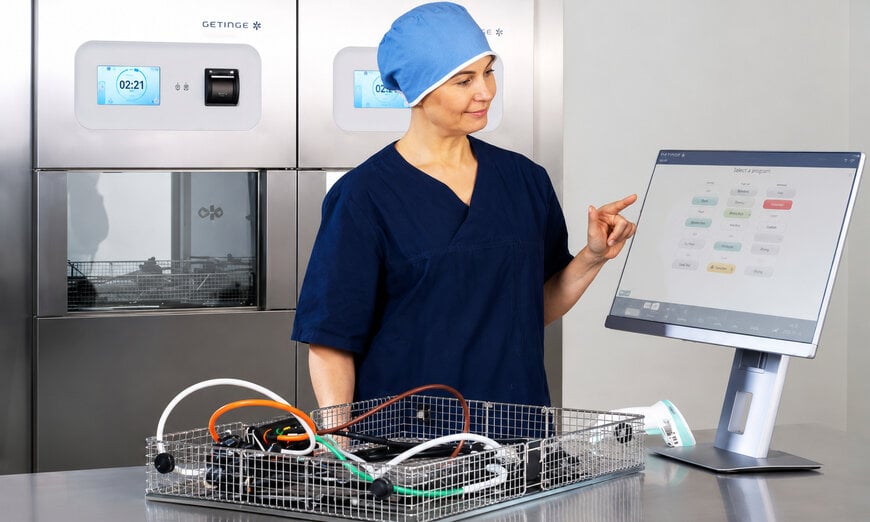
Getinge has announced the launch of its Aquadis Endo 110 automated endoscope reprocessor to address the rising throughput demands within central sterile supply departments. The system converts complex manual preparation steps into a validated, machine-driven process that accelerates the availability of flexible endoscopes while minimizing the risk of healthcare-associated infections in medical facilities.
Fluidic channel coupling and fluid-dynamic cycle reduction
The infrastructure of modern endoscopy departments requires precise synchronization of cleaning and disinfection cycles to eliminate bottlenecks during diagnostic procedures. Through the integration of automated channel connections and optimized flow geometries, the reprocessing unit achieves a reduction in standard cycle time to 20 minutes. This fluid-dynamic optimization enables an increase in total throughput by up to 36% compared to previous equipment generations from the manufacturer.
For chemical processing, the system utilizes highly concentrated XEN detergent and disinfectant formulations. These matched media formulations minimize thermochemical exposure times, directly leading to lower water and energy consumption per reprocessing cycle. This reduced resource requirement supports hospitals in reaching operational sustainability goals without compromising the microbiological validation of the thermolabile medical devices.
Radio-frequency identification and digital workflow integration
The system architecture relies on complete traceability of all process parameters to maintain regulatory quality standards. Using integrated radio-frequency identification technology, the system automatically detects connected endoscopes as well as operators, blocks incorrect program selections, and initiates the specific validated reprocessing protocol. This sensor-based error prevention significantly reduces fault rates during manual loading.
The reprocessors connect directly to digital management systems such as FleetView and T-DOC Endo via standardized interfaces. This software integration grants sterilization managers real-time access to process data, device status, and consumption metrics. Furthermore, an independent monitoring system continuously checks critical process parameters such as temperature, pressure, and flow rate across individual channels, generating a complete digital record for every procedure.
Additional Context: This section details technical specifications and competitive benchmarking not included in the original product announcement
Within the automated endoscope reprocessor market, this platform competes directly with established lines such as the Advantage Plus series from Cantel Medical or the Medivators series of reprocessing systems. Objective technical comparison reveals that while conventional reprocessors often require manual hose hookups for each individual endoscope channel which extends setup times and increases cross-contamination risks, Getinge utilizes an automated plug-in coupling. This design minimizes mechanical stress on sensitive channels and stabilizes flow profiles during the high-level disinfection phase.
Additionally, linking radio-frequency identification data directly to hospital IT infrastructures enables automated fleet management that goes beyond basic device diagnostics. However, running highly concentrated cleaning chemicals within minimal cycle times demands a precisely calibrated dosing pump infrastructure; concentration measurement deviations inside the short 20-minute cycles can result in incomplete disinfection or cause material degradation on the flexible polymer sheaths of the endoscopes.
Edited by Sucithra Mani, Induportals editor – adapted by AI.
www.getinge.com

