
www.medical-devices.tech
12
'26
Written on Modified on
ZEISS Launches AT LUCIA Toric 721P Intraocular Lens Platform
ZEISS Medical Technology introduces a bitoric, monofocal intraocular lens designed for concurrent cataract treatment and corneal astigmatism correction during ophthalmic surgery.
www.zeiss.com
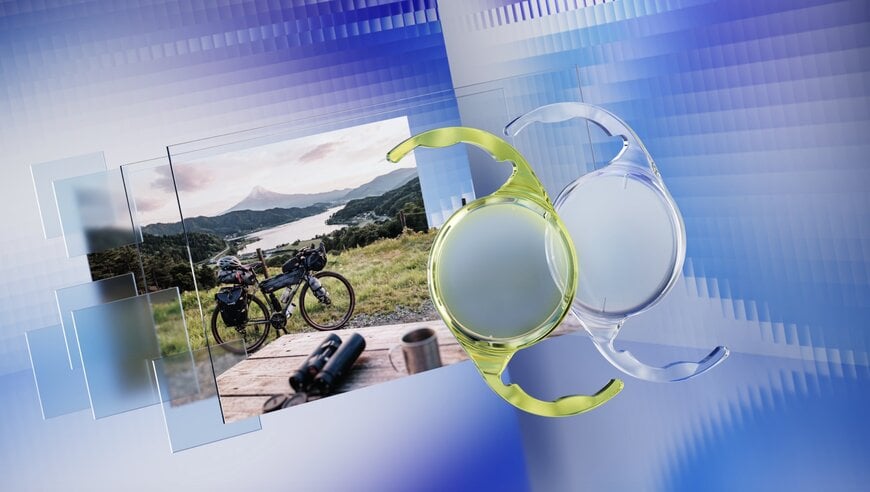
ZEISS Medical Technology has completed the first clinical implantations of the ZEISS AT LUCIA toric 721P intraocular lens (IOL). Developed to treat cataracts while simultaneously correcting astigmatism, the platform is undergoing evaluation in an early-access clinical trial across European medical centers.
Early Clinical Performance and Evaluation
The early-access clinical trial involves a select group of ophthalmic surgeons from six European countries, including the Czech Republic, Germany, Italy, Spain, Sweden, and the United Kingdom. Surgeons participating in the initial phases have reported positive early observations regarding the handling and stability of the platform.
According to Dr. Andrea Janeková, Ph.D., Head of the Center for Cataract, Refractive and Vitreoretinal Surgery at Eye Center Prague, Czech Republic, the lens combines precision, structural stability, and surgical handling, supporting refractive predictability in modern cataract surgery.
Dr. Helena Noguera, from Miranza COI Bilbao and the Galdácano-Usansolo University Hospital in Spain, noted that the main advantages of the lens are its foundational platform, its bitoric design, and its rotational stability, which improve the predictability of postoperative visual outcomes.
Structural Design and Rotational Stability
The technical layout of the lens features a step-vaulted haptic profile and an optimized haptic-optic junction. These geometric features are designed to improve the rotational stability of the lens inside the capsular bag following surgical implantation. Furthermore, the optical zone incorporates a non-constant aspheric profile to enhance contrast sensitivity and overall quality of vision.
Prof. Sathish Srinivasan, Medical Director at Ayrshire Eye Clinic in Scotland, UK, stated that the non-constant aspheric profile and the step-vaulted mechanics enhance patient vision quality and optimize rotational holding. Dr. Amin-Robert Kassem, Chief Physician and Clinic Owner at Värnamo Eye Center in Sweden, added that the lens demonstrates consistent visual outcomes and ease of surgical delivery, expanding treatment options for astigmatic cataract patients.
Regulatory Status and Exhibition Schedule
The ZEISS AT LUCIA toric 721P IOL carries a valid CE mark. The lens platform is scheduled to be showcased at the International Congress of German Ophthalmic Surgery (DOC) in Nuremberg, Germany, from June 18 to 20, 2026. Following the initial technical exhibition, commercial availability is anticipated to expand to select European countries later in 2026.
Additional Context
This section details technical specifications not included in the original news release.
Toric intraocular lenses require precise alignment along the patient’s steep corneal meridian to neutralize astigmatism. Corneal astigmatism is caused by non-spherical variations in the curvature of the cornea, which splits incoming light into two distinct focal lines. Misalignment of a toric IOL drastically reduces its effectiveness; every 1 degree of rotational deviation from the intended cylinder axis causes an approximate 3.3% loss of astigmatic correction. If a lens rotates 30 degrees, the astigmatic aberration is completely uncorrected and can introduce new refractive errors, making rotational stability the critical factor in toric IOL engineering.
To achieve rotational stability, modern IOLs utilize hydrophobic acrylic materials with high surface tackiness and specialized haptic geometries. The step-vaulted haptic design forces the optic posteriorly against the posterior capsule wall, maximizing friction and minimizing the space available for fluid movement or capsular fibrosis to shift the lens.
Bitoric lens configurations split the total cylinder correction between the anterior and posterior surfaces of the optic, reducing peripheral optical aberrations and enabling thinner profile lenses. A non-constant aspheric profile corrects for positive corneal spherical aberrations without increasing sensitivity to decentration or tilt, maintaining high contrast sensitivity even under low-light mesopic conditions when the pupil dilates.
Edited by Romila DSilva, Induportals Editor, with AI assistance.
www.zeiss.com

