
www.medical-devices.tech
18
'26
Written on Modified on
AI Contouring Advances Radiation Therapy Planning
Siemens Healthineers has introduced CE-marked AI-driven contour automation for radiotherapy planning, targeting workflow standardization in oncology imaging and treatment design.
www.siemens-healthineers.com
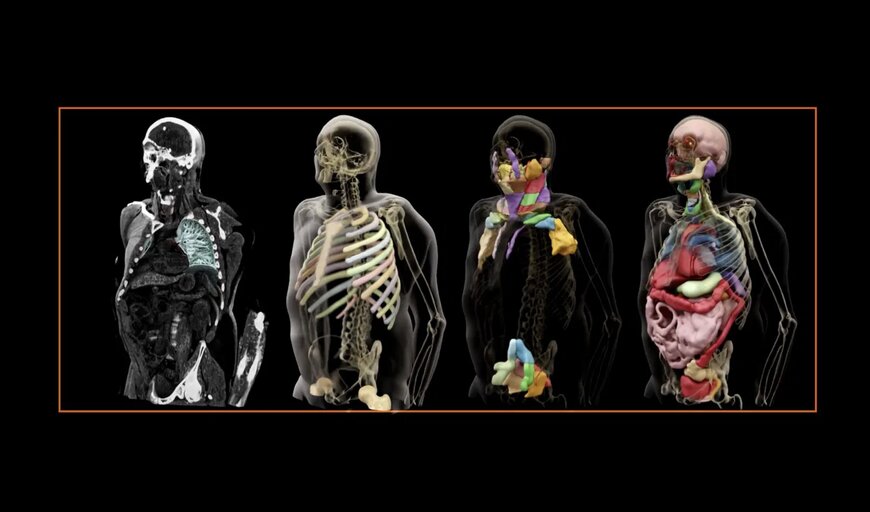
Siemens Healthineers has announced CE marking for AI contouring integrated with the Varian Eclipse treatment planning system, expanding the use of artificial intelligence in radiation oncology workflow automation. The software is designed for radiotherapy departments using CT- and MR-based treatment planning, where manual anatomical contouring remains a major operational bottleneck.
CE-Marked AI Integration for Radiotherapy Workflow Automation
The announcement was made at ESTRO 2026, held in Stockholm, Sweden, from 15–19 May 2026, where Siemens Healthineers presented workflow automation technologies for oncology care. The newly CE-marked AI contouring capability is embedded directly within the Eclipse treatment planning environment, eliminating the need for separate contouring platforms or external workflow transfers.
The system automatically generates contours for more than 200 predefined anatomical structures from CT and MR imaging datasets. These include organs at risk, lymph nodes, and diagnosed brain metastases relevant to treatment planning.
Rather than replacing clinician review, the software provides an initial standardized contour set that radiation oncology teams can inspect, refine, and approve before treatment planning proceeds.
Why Automated Contouring Matters in Radiation Oncology
Contouring is one of the most labour-intensive stages in radiotherapy planning. Radiation oncologists and dosimetrists manually define tumour targets and surrounding healthy tissue structures to guide dose optimisation and treatment delivery.
This process introduces several operational constraints. Inter-observer variability can result in differences between clinicians defining identical structures. Increased case complexity, particularly in multimodal oncology imaging, can lengthen planning timelines. Departmental workload pressure can also reduce throughput.
AI contouring addresses these constraints by automating repetitive segmentation tasks while preserving clinical oversight.
Because the software operates within the existing Eclipse workflow, clinicians avoid exporting imaging datasets between disconnected software systems, which can reduce process friction in high-throughput oncology environments.
According to Siemens Healthineers, the contouring models are based on established clinical contouring guidelines, including frameworks such as RTOG, ESTRO, and DAHANCA, enabling guideline-aligned anatomical delineation rather than purely generic segmentation behaviour.
Clinical Role of AI in Treatment Planning Consistency
The technical relevance of AI contouring lies less in full autonomy and more in workflow standardisation.
Radiotherapy treatment quality depends heavily on accurate structure definition because dose calculation, organ sparing, and target coverage all rely on contour precision. Variability in anatomical delineation can directly affect planning consistency across departments.
By generating reproducible baseline contours, AI-assisted segmentation can support more consistent planning between clinicians and across institutions.
The Siemens Healthineers implementation preserves full clinician control, meaning contours are editable rather than automatically approved. This aligns with current regulatory and clinical practice expectations for AI-assisted medical decision support.
Ashley Smith, head of Digital Oncology at Siemens Healthineers, described the technical intent as reducing friction in routine planning processes so clinicians can focus on patient-specific treatment decisions.
Rebecca Schuster, head of Cancer Therapy Imaging at Siemens Healthineers, stated that the integration builds on the company’s prior AI contouring work and extends AI-enabled workflow support directly into radiotherapy planning environments.
Imaging Informatics and Precision Oncology Applications
The solution is relevant across multiple radiotherapy treatment scenarios where contour definition is time-sensitive and anatomically complex.
Examples include head-and-neck radiotherapy, where numerous organs at risk require detailed segmentation; brain metastases planning, where lesion delineation influences stereotactic dose accuracy; and pelvic oncology planning, where reproducible organ contouring affects adaptive treatment quality.
Because the software accepts both CT and MR datasets, it supports multimodal imaging workflows increasingly used in precision oncology.
Its direct integration into the Eclipse treatment planning system also makes deployment more practical for departments already standardised on the Varian ecosystem, reducing infrastructure overhead compared with standalone segmentation tools.
Additional Context
This section details technical specifications and competitive benchmarking not included in the original press release.
AI-based auto-contouring has become a competitive segment in radiation therapy planning, with vendors differentiating primarily through integration depth, anatomical coverage, modality support, and workflow architecture.
RaySearch’s RayStation platform includes automated segmentation tools for treatment planning workflows, positioning it as a comparable integrated planning environment for radiotherapy automation.
Siemens Healthineers’ differentiator in this release is the combination of direct Eclipse integration and support for more than 200 predefined anatomical structures from CT and MR images.
Other commercial offerings, including standalone auto-contouring platforms, often require external image routing, cloud-based processing, or additional software orchestration layers. In contrast, the embedded Eclipse implementation reduces interoperability complexity inside departments already using Varian planning infrastructure.
Edited by Aishwarya Mambet, Induportals Editor, with AI assistance.
www.siemens-healthineers.com

