
www.medical-devices.tech
10
'26
Written on Modified on
Integrated Imaging Enhances Precision in Neurosurgery
GE HealthCare and Medtronic integrate intraoperative ultrasound with surgical navigation to improve real-time imaging and decision-making during cranial procedures.
www.gehealthcare.com
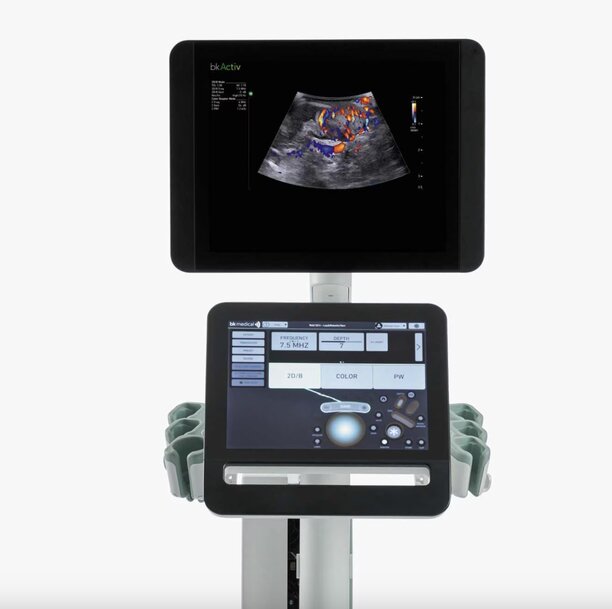
GE HealthCare has introduced a digital integration between its intraoperative ultrasound system and a surgical navigation platform developed by Medtronic. The solution enables real-time imaging during neurosurgical procedures, supporting improved accuracy and workflow continuity in the operating room.
Combining Real-Time Imaging with Surgical Navigation
The integration connects intraoperative ultrasound imaging with a navigation system that combines surgical planning, navigation, and robotic capabilities. This allows surgeons to access live imaging alongside pre-operative MRI or CT data within a unified interface.
The system is designed as a plug-and-play solution, enabling incorporation into existing surgical workflows without requiring significant process changes. This is particularly relevant in neurosurgery, where workflow efficiency and precision are critical.
Addressing Intraoperative Anatomical Changes
During cranial procedures, anatomical shifts can occur due to factors such as tissue manipulation or fluid loss. This phenomenon, commonly referred to as brain shift, reduces the accuracy of pre-operative imaging over time.
By providing real-time ultrasound imaging, the system enables continuous visualisation of anatomical structures during surgery. This allows clinicians to compare live intraoperative data with pre-surgical images, improving spatial accuracy and supporting informed decision-making.
Imaging Capabilities and System Features
The intraoperative ultrasound system incorporates features designed for neurosurgical environments. These include Doppler imaging for visualising blood flow, algorithms that enhance image uniformity and resolution, and display functions that enable multiple members of the surgical team to view imaging data simultaneously.
User interface controls are adapted for sterile environments, allowing surgeons to interact with the system without interrupting the procedure. Sterilisable components and immersion-compatible transducers support compliance with operating room requirements.
Workflow Integration and Clinical Efficiency
The integration of imaging and navigation systems reduces the need to switch between separate platforms during surgery. By consolidating data sources, the system improves workflow efficiency and reduces cognitive load on surgical teams.
Real-time imaging also supports faster intraoperative adjustments, potentially reducing procedure time and improving surgical outcomes in complex cranial interventions.
Advancing Image-Guided Surgery
The combination of intraoperative ultrasound and navigation systems reflects ongoing developments in image-guided surgery. By enabling real-time visualisation and continuous data integration, such technologies support greater precision and adaptability in neurosurgical procedures.
As surgical environments become increasingly data-driven, integrated imaging solutions play a central role in improving accuracy, workflow efficiency, and clinical decision-making.
Edited by Romila DSilva, Induportals Editor, with AI assistance.
www.gehealthcare.com

