
www.medical-devices.tech
30
'26
Written on Modified on
Imaging research partnership for advanced radiology development
GE HealthCare expands its research collaboration with Stanford Radiology to support the development of AI-assisted imaging, multimodal diagnostics, and clinical imaging workflows.
www.gehealthcare.com
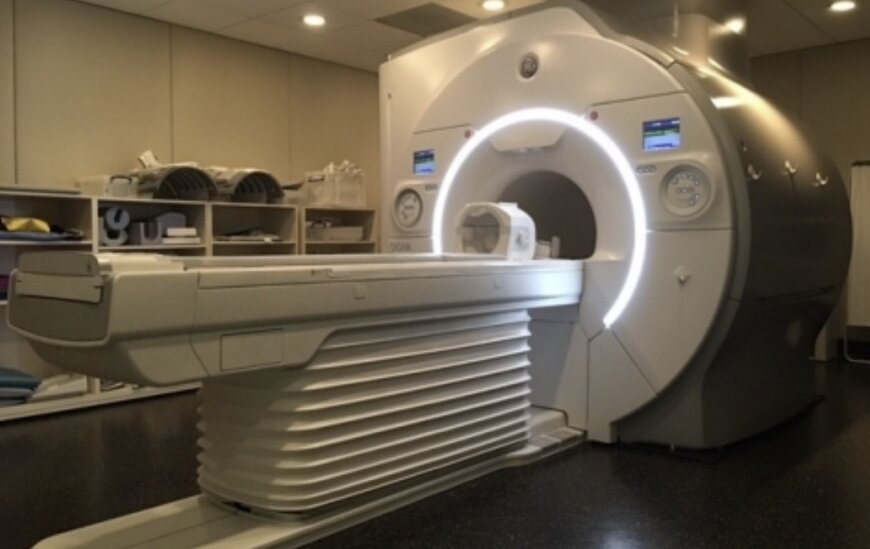
Medical imaging development increasingly relies on collaboration between clinical research institutions and technology providers to improve diagnostic accuracy and workflow efficiency. In this context, GE HealthCare and the Stanford Medicine Department of Radiology expanded their long-standing collaboration by establishing a joint Center of Excellence focused on advanced imaging research.
Joint research structure for imaging technology development
The Center of Excellence is intended to coordinate research activities across magnetic resonance imaging (MRI), computed tomography (CT), molecular imaging, artificial intelligence (AI), pharmaceutical diagnostics, and interventional radiology. The collaboration focuses on integrating academic research, clinical validation, and imaging technology development to support translational research in radiology.
Research activities include development of advanced image acquisition and reconstruction methods as well as improvements in imaging hardware to support neurological, cardiac, breast, pediatric, and whole-body diagnostic imaging.
AI integration in diagnostic imaging workflows
Part of the collaboration involves research into AI-supported software tools for MR and CT imaging. These projects examine how machine learning can assist clinicians in evaluating diagnostic images and improving protocol planning and scheduling processes within radiology departments.
These efforts are intended to improve diagnostic imaging accuracy while supporting workflow optimization in clinical radiology environments.
Imaging platforms under clinical evaluation
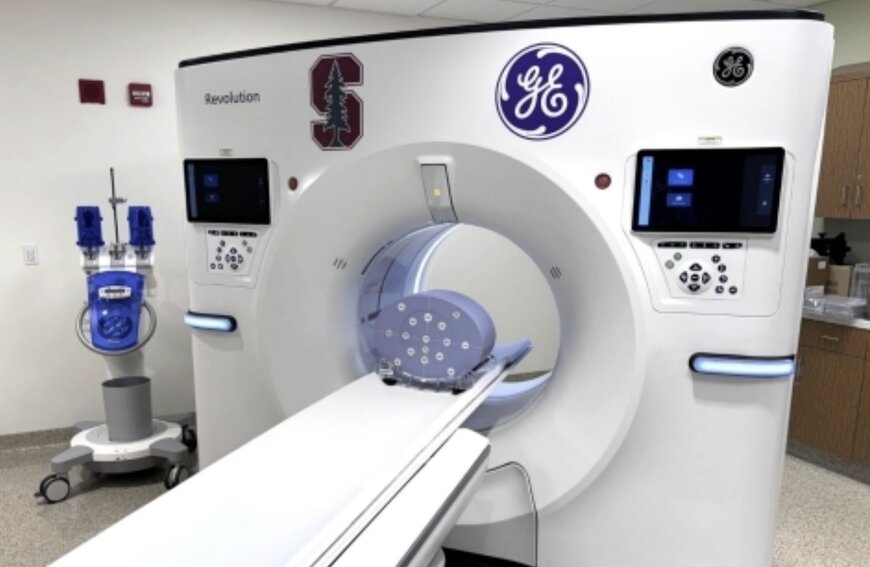
The collaboration also includes work related to GE HealthCare’s Photonova™ Spectra photon-counting CT system, which uses Deep Silicon detector technology and received U.S. FDA clearance. Research activities include advancing both the physical imaging performance and the clinical use of photon-counting CT technology.
In addition, the organizations plan clinical evaluation of total-body PET/CT systems to investigate potential clinical applications and diagnostic pathways. Research in interventional radiology will also examine minimally invasive image-guided techniques intended to improve procedural workflows for clinicians and patient treatment approaches.
Long-term collaboration history and measurable research output
The collaboration between GE HealthCare and Stanford Radiology spans more than four decades and has produced 153 funded research projects involving 44 Stanford principal investigators. The joint work has resulted in 184 peer-reviewed scientific publications and 66 licensed patents.
Stanford has also contributed to validation and performance benchmarking of multiple GE HealthCare MRI technologies. Examples include research contributing to Sonic DL™, a deep learning-based MRI reconstruction technology, and clinical input into SIGNA™ Sprint 1.5T, SIGNA™ Bolt 3T, and SIGNA™ One AI-enabled MRI workflow platforms.
Previous joint CT research has included protocol optimization, radiation dose reduction, AI-supported image quality improvements, and evaluation of next-generation CT technologies. Work in molecular imaging, particularly PET/CT research linked to the Stanford Molecular Imaging Program, has supported clinical research in oncology, cardiology, and neurology.
Edited by industrial journalist Aishwarya Mambet, with AI-assistance.
www.gehealthcare.com

