
www.medical-devices.tech
25
'26
Written on Modified on
Getinge Launches Advanced ECLS Platform with Integrated Monitoring
Cardiohelp II introduces enhanced clinical insights, workflow guidance, and transportable design to support extracorporeal life support and ECMO applications in acute care settings.
www.getinge.com
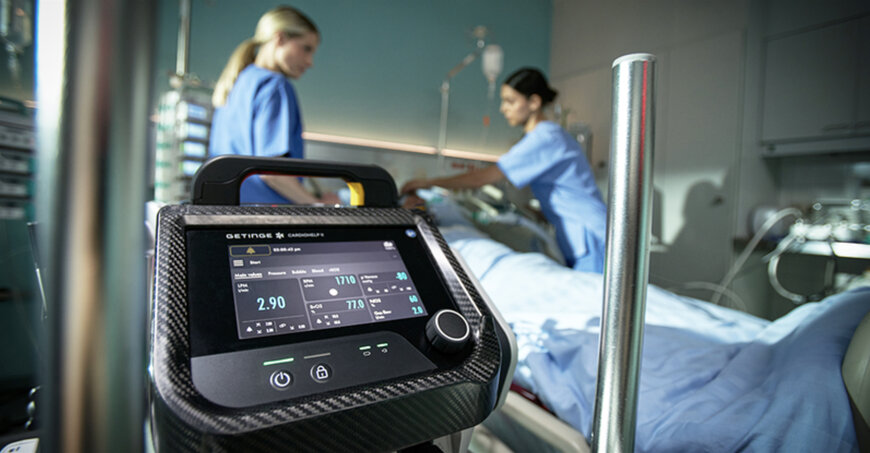
Critical care environments such as intensive care units, cardiac centers, and emergency transport systems require precise, real-time monitoring for extracorporeal life support (ECLS), and Getinge’s Cardiohelp II platform integrates advanced sensing, workflow support, and mobility to improve management of complex ECMO therapies.
Extracorporeal life support systems are used to temporarily support heart and lung function in critically ill patients, often in cases of severe respiratory or cardiac failure. With the introduction of Cardiohelp II, Getinge extends its existing ECLS platform by integrating enhanced monitoring capabilities and decision-support tools designed to improve clinical response times and treatment consistency.
Advanced Monitoring for Multi-Parameter Clinical Insight
Cardiohelp II combines multiple monitoring functions within a single platform, enabling clinicians to track key physiological parameters during ECLS therapy. The system includes continuous measurement of blood parameters, expanded trend analysis, and near-infrared spectroscopy (NIRS)-based regional oxygen saturation (rSO₂) monitoring, allowing assessment of tissue oxygenation in real time.
An integrated electronic gas blender supports precise control of gas delivery, which is critical in extracorporeal membrane oxygenation (ECMO) procedures. These features allow clinicians to detect physiological changes earlier and adjust therapy accordingly, particularly in rapidly evolving critical care scenarios.
Workflow Integration and Alarm-Driven Guidance
The platform incorporates step-by-step workflow guidance and alarm-driven processes to support clinical teams during ECLS management. By structuring tasks and highlighting deviations through alerts, the system aims to reduce response time and improve consistency in treatment delivery.
This approach is particularly relevant in high-pressure environments where multiple parameters must be monitored simultaneously, and rapid intervention is required to maintain patient stability.
Transportable Design for Continuity of Care
Cardiohelp II retains a compact and lightweight design, enabling use both within hospital settings and during patient transport. Mobility is a key requirement in ECLS applications, where patients may need to be transferred between departments or facilities while maintaining continuous life support.
The system builds on the established use of transportable ECMO platforms, allowing clinicians to maintain consistent monitoring and therapy during transitions across care environments.
Evolution of an Established ECLS Platform
Cardiohelp II builds on the legacy of the previous Cardiohelp-i system, incorporating feedback from clinical users to address increasing complexity in ECLS management. Enhancements focus on deeper clinical insight, improved usability, and more integrated system architecture.
The platform has received CE marking and will enter a limited clinical use phase with selected partners before broader commercial deployment across CE markets. This phased introduction allows further validation in real-world clinical settings and continued collaboration with ECMO centers.
By integrating advanced monitoring, workflow support, and transport capabilities, Cardiohelp II reflects ongoing developments in ECLS technology aimed at improving precision and responsiveness in critical care treatment.
Edited by Natania Lyngdoh, Induportals Editor — Adapted by AI.
www.getinge.com

