
www.medical-devices.tech
19
'26
Written on Modified on
Blood-Based Biomarkers Advance Neurological Disease Research
Siemens Healthineers expands its diagnostics portfolio with automated assays to quantify tau biomarkers, supporting scalable brain health research and clinical evidence generation.
www.siemens-healthineers.com
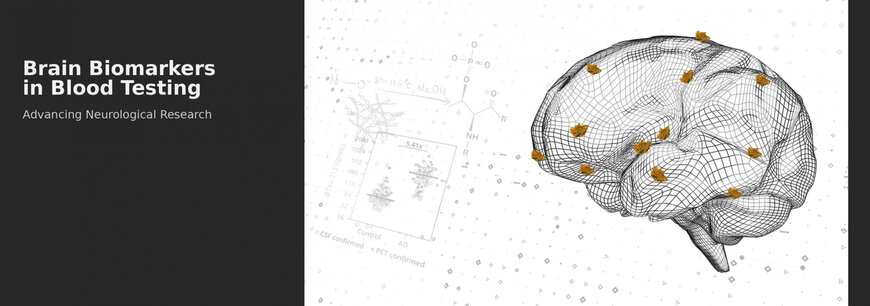
Siemens Healthineers has introduced a set of research-use-only biomarker assays designed to quantify neurological indicators in blood, enabling less invasive investigation of neurodegenerative diseases such as Alzheimer’s and supporting the broader brain health diagnostics ecosystem.
Expanding Blood-Based Neurological Testing
The newly available assays Atellica IM phosphorylated tau 217 (p-tau217) and brain-derived tau (BD tau) are designed for use on the Atellica Solution IM and Atellica CI analyzers. These chemiluminescent immunoassays provide quantitative measurement of tau proteins associated with neurodegenerative processes, offering an alternative to cerebrospinal fluid (CSF) analysis, which typically requires lumbar puncture.
Blood-based biomarker testing addresses a key limitation in neurological diagnostics: scalability. While CSF sampling provides high diagnostic specificity, it is invasive and less suited for repeated or large-scale screening. In contrast, blood assays can be integrated into routine laboratory workflows, enabling longitudinal monitoring and broader population studies.
Clinical Context and Disease Burden
The relevance of these assays is underscored by the global prevalence of dementia, with approximately 10 million new cases diagnosed annually. Alzheimer’s disease accounts for an estimated 60–70% of these cases, creating a growing demand for earlier detection and disease monitoring tools.
Tau proteins, particularly phosphorylated tau species such as p-tau217, are increasingly recognized as reliable biomarkers for Alzheimer’s pathology. Quantifying these biomarkers in plasma has become a focal point in neurological research, as it may support earlier identification of disease progression and stratification of patient populations.
Analytical Sensitivity and Automation
The assays leverage chemiluminescent immunoassay technology to detect low concentrations of brain-derived proteins in blood. This requires high analytical sensitivity, as biomarker concentrations in plasma are significantly lower than in CSF.
The Atellica IM platform is engineered to enhance signal detection and reproducibility, enabling reliable quantification of neurological biomarkers in routine laboratory environments. Automated processing further supports throughput requirements for large cohort studies and multi-center research programs.
Research Collaboration and Validation Efforts
Siemens Healthineers is participating in multiple collaborative research initiatives to validate the clinical utility of blood-based tau biomarkers. These include multi-cohort studies such as PREDICTOM, ACCESS-AD, and collaborations with the Banner Sun Health Research Institute.
Ongoing research focuses on evaluating the diagnostic performance of plasma p-tau217 across diverse populations, with early findings indicating potential applicability in clinical settings for early detection and disease characterization.
Broader Brain Health Diagnostics Portfolio
In addition to the newly introduced tau assays, Siemens Healthineers offers other neurological biomarkers, including a CE-marked assay for predicting future multiple sclerosis disease activity. Further development is underway for additional biomarkers such as Apolipoprotein E-ε4 (ApoE-ε4), which is associated with both Alzheimer’s disease and cardiovascular conditions.
These developments reflect a broader shift toward integrated, blood-based biomarker panels within the brain health diagnostics ecosystem, supporting both research and potential clinical translation.
Position Within the Diagnostics Landscape
Blood-based tau assays are an emerging area of competition among diagnostics providers, with performance typically evaluated based on sensitivity, specificity, and correlation with established CSF and imaging biomarkers. The integration of such assays into automated, high-throughput platforms represents a key differentiator, particularly for large-scale research and future clinical deployment.
Edited by an industrial journalist, Sucithra Mani, with AI assistance.
www.siemens-healthineers.com

