
www.medical-devices.tech
20
'26
Written on Modified on
GE HealthCare Secures FDA Clearance For Next Generation SIGNA MRI
GE HealthCare has received FDA 510(k) clearance for its new SIGNA MRI portfolio, featuring AI-driven workflows and sustainable technology to improve clinical efficiency and imaging.
www.gehealthcare.com
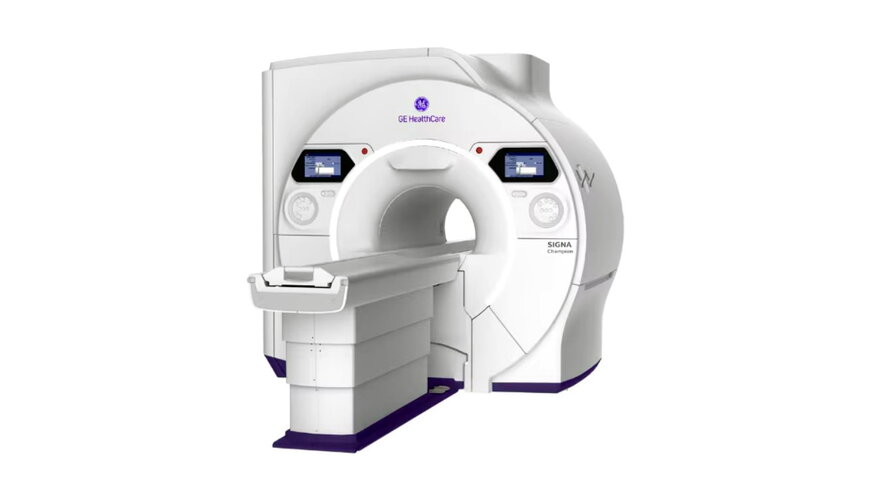
GE HealthCare has obtained U.S. Food and Drug Administration (FDA) clearances for multiple next-generation SIGNATM magnetic resonance imaging systems and related technologies. The approvals cover new hardware and software developments designed to improve image quality, reduce scan times, and enhance operational performance across radiology departments and specialized imaging centers.
Context of the Cooperation and Portfolio Development
GE HealthCare develops and manufactures diagnostic imaging systems, including MRI platforms deployed in hospitals, outpatient imaging centers, and academic medical institutions. The recent clearances mark a coordinated evolution of its MRI portfolio, integrating gradient hardware, radiofrequency (RF) technology, artificial intelligence (AI)-enabled reconstruction algorithms, and workflow software.
The technical challenge addressed by this portfolio update concerns increasing demand for higher-resolution imaging, shorter examination times, and more standardized image quality across sites. MRI departments face pressure to manage rising patient volumes while maintaining diagnostic accuracy in applications such as neurology, oncology, musculoskeletal imaging, and cardiology. Achieving these objectives requires system-level optimization rather than incremental component upgrades.
Technical Architecture and System Enhancements
The cleared SIGNATM MRI systems incorporate updated gradient subsystems and RF chains engineered to support higher performance pulse sequences and improved signal-to-noise ratio (SNR). Enhanced gradient amplitude and slew rate parameters enable faster spatial encoding, contributing to reduced acquisition times in advanced sequences.
AI-based image reconstruction software is integrated at the scanner level to accelerate acquisition while maintaining diagnostic image fidelity. These algorithms operate within the image reconstruction pipeline, enabling noise reduction and artifact suppression without proportionally increasing scan duration. The systems are designed to comply with relevant MRI safety standards and electromagnetic compatibility requirements applicable in the United States.
Workflow software improvements target exam planning, protocol standardization, and post-processing automation. By embedding automation into sequence selection and image reconstruction, the platform aims to reduce operator variability and improve reproducibility across sites, supporting consistent clinical outcomes within digital infrastructure environments.
Deployment in Clinical Environments
The FDA-cleared systems are intended for deployment in hospital radiology departments and advanced imaging centers. Integration is designed to be compatible with existing hospital IT systems, including picture archiving and communication systems (PACS) and radiology information systems (RIS). Implementation typically involves site preparation, system installation, calibration, and application training provided by GE HealthCare’s engineering and clinical support teams. The portfolio approach allows healthcare providers to select configurations aligned with clinical workload, from routine diagnostic imaging to advanced research applications.
Clinical and Operational Impact
In the absence of disclosed quantitative performance data, the expected impact can be assessed through system design principles. Higher gradient performance and AI-accelerated reconstruction are structurally associated with shorter acquisition times and improved image sharpness. Reduced scan duration can increase patient throughput, while standardized protocols can enhance exam reproducibility and reduce repeat scans.
By combining hardware, software, and AI within a unified MRI architecture, GE HealthCare’s updated SIGNATM portfolio addresses both imaging precision and clinical efficiency, supporting radiology departments in managing growing diagnostic demand while maintaining image quality standards.
www.gehealthcare.com

