
www.medical-devices.tech
06
'26
Written on Modified on
AI-Assisted Fetal Ultrasound Integration by GE HealthCare and Diagnoly
GE HealthCare and Diagnoly collaborate to integrate real-time AI fetal ultrasound analysis into Voluson systems to enhance diagnostic workflows in obstetric imaging.
www.gehealthcare.com
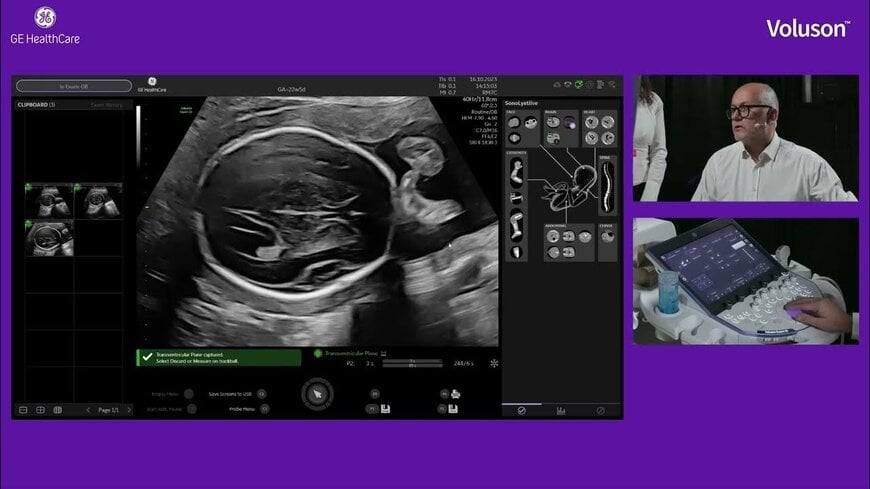
GE HealthCare and Diagnoly are collaborating to integrate real-time artificial intelligence (AI) capabilities into GE HealthCare’s Voluson family of women’s health ultrasound systems. The cooperation applies AI-driven analysis to fetal ultrasound imaging, aiming to support clinicians with standardized exam completeness and anatomical assessment in obstetrics.
Context of the Cooperation
GE HealthCare is a global medical technology company specializing in imaging systems and digital infrastructure for healthcare delivery. Diagnoly is a developer of AI-enabled clinical support tools for ultrasound imaging, particularly in fetal assessment. The partnership targets the clinical challenge of variability and incomplete assessments in fetal ultrasound exams, where up to half of abnormalities may go undetected without systematic quality checks.
The complexity of obstetric ultrasound requiring acquisition of multiple anatomical planes, rapid interpretation, and quality criteria verification motivates the integration of AI into existing imaging platforms. Cooperation enables GE HealthCare to leverage Diagnoly’s AI while aligning with regulatory clearances such as FDA and CE marks for clinical use.
Technical Solution and Responsibilities
The core technical component is Diagnoly’s Fetoly software, a real-time AI application that analyzes incoming ultrasound image streams and provides continuous feedback on anatomical landmark capture and scan completeness. Fetoly employs machine-learning algorithms trained on clinical data to detect key fetal structures and verify that required views adhere to quality protocols. It operates by receiving video frames from the ultrasound system and evaluating them against standardized criteria without altering the operator’s workflow.
GE HealthCare’s role is to integrate this AI module with its Voluson ultrasound systems advanced diagnostic platforms widely used in women’s health imaging ensuring interoperability with system interfaces, probe outputs, and clinical reporting workflows. GE HealthCare maintains responsibility for hardware performance, image acquisition quality, and overall system stability, while Diagnoly provides the AI analytics component.
Deployment and Implementation
Integration focuses on installation within clinical environments where Voluson systems are deployed. The AI runs in real time, supporting second- and third-trimester fetal assessments, including biometric measurements and view completeness checks. Hardware interfacing typically involves connecting the AI processing unit or compatible device to the ultrasound machine’s image output, with software configured to overlay annotations and quality feedback during exams.
The phased implementation includes validation across use cases such as fetal heart and brain evaluation, aligning with national and international imaging guidelines to ensure completeness and consistency. System engineers from both companies collaborate on calibration, workflow integration, and compliance with medical device regulations.
Applications and Use Cases
Target industries include maternal-fetal medicine, obstetrics departments, and radiology practices focusing on women’s health. Use cases encompass routine fetal anatomy scans, detection of congenital anomalies, and quality assurance during high-volume prenatal clinics. The aim is to reduce operator variability, support less experienced sonographers, and improve diagnostic confidence through structured imaging feedback.
Expected Impact
While specific figures have not been publicly disclosed, integrating AI analytics is expected to standardize fetal imaging procedures, improving exam completeness metrics and potentially reducing missed findings. By embedding objective quality criteria evaluation into clinical workflows, the solution enhances operational efficiency and supports adherence to imaging protocols, which are measurable through exam completeness rates and reduced repeat scans.
www.gehealthcare.com

