
www.medical-devices.tech
25
'25
Written on Modified on
GE HealthCare Introduces Photonova Spectra to Transform Spectral CT Imaging
Deep Silicon detectors, 8-bin energy resolution, ultra-high-definition imaging, rapid 0.23-second rotation, and AI-powered reconstruction enable clearer visualization, richer data, and streamlined clinical workflows.
www.gehealthcare.com
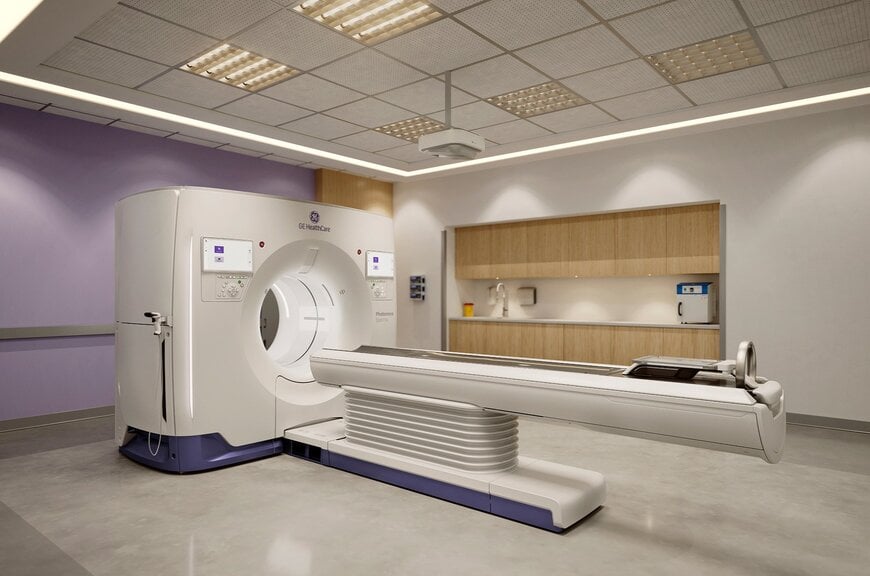
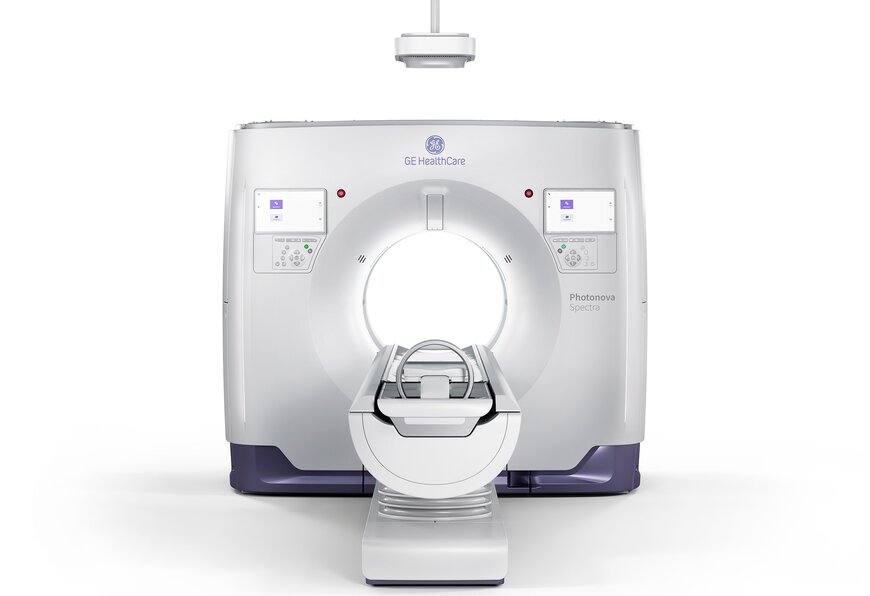
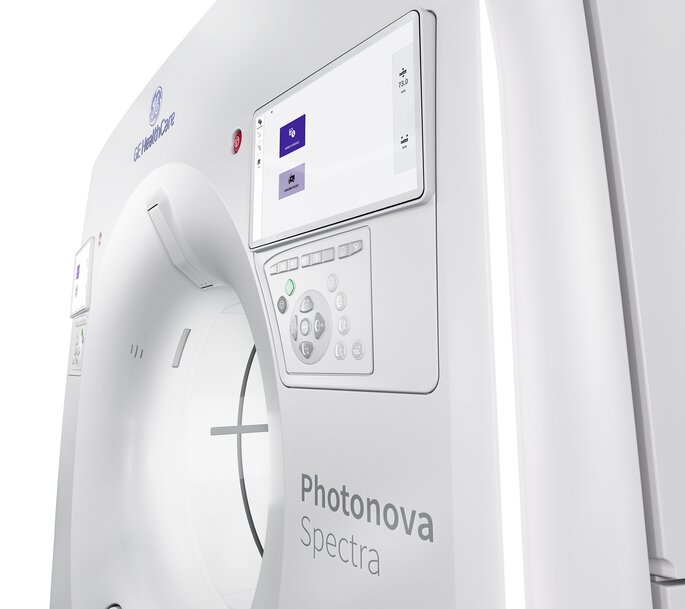
GE HealthCare announced the submission of a 510(k) to the U.S. FDA seeking clearance for Photonova™ Spectra, its new photon-counting computed tomography (PCCT) system with advanced AI algorithms – marking a major milestone in the company’s decades-long history of CT innovation. Built on GE HealthCare’s proprietary Deep Silicon detector technology, Photonova Spectra is designed to deliver remarkable spectral and spatial resolution for ultra-high-definition (UHD) imaging with wide coverage, seeking to enable fast acquisition speeds, precise visualization of anatomical structures and enhanced material separation.
Photon-counting CT represents a transformative advancement in medical imaging. Unlike conventional CT systems that convert X-rays into light before measuring them, photon counting CT directly counts individual X-ray photons and measures their energy, enabling the potential for higher spectral and spatial resolution and improved tissue characterization. This process makes it possible to give clinicians more information and confidence to help detect and diagnose disease. Photonova Spectra takes this innovation further by using Deep Silicon, a novel detector material that is designed to bring enhanced spectral imaging, aiming to support advanced lesion characterization and treatment monitoring with CT.
In today’s fast-paced healthcare environment, clinicians need definitive answers, especially as patient volumes rise and diagnostic complexity increases. GE HealthCare’s Photonova Spectra was intentionally engineered to address these challenges. Harnessing the full potential of its proprietary Deep Silicon detectors, the system’s UHD imaging is designed to deliver wide coverage, enabling fast acquisition speeds and the precise visualization of subtle tissue variations, small lesions and vascular structures. With on-demand spectral imaging for every scan, it also seeks to empower clinicians to detect, characterize and monitor disease with confidence. Staff can also rely on one protocol setup for many exams, reducing complexity and supporting efficiency. Altogether, these capabilities aim to deliver clinicians the information they need in one exam and enable fast, confident diagnoses and treatment planning.
Deep Silicon powers precision across care pathways
Silicon stands out as a high-performing semiconductor material due to its purity and structural consistency. When interacting with X-ray photons, its unique composition enables the precise measurement of photon energy and delivers high levels of energy resolution – critical for advanced image reconstruction. This capability can allow clinicians to obtain images with high contrast, impressive low-contrast detectability and improved material characterization for potentially greater diagnostic confidence.
Leveraging GE HealthCare’s innovative Deep Silicon detector design, Photonova Spectra aims to enhance image quality by reducing signal overload and improving energy separation. This enables GE HealthCare’s photon counting CT system to clearly distinguish between different materials such as iodine, calcium and fat with remarkable precision. Additionally, its wide detector coverage and rapid rotation speed (0.23 seconds) support fast acquisition and motion-free imaging – even in challenging patient scenarios.
“Photon counting CT is a fundamentally different approach to imaging. It can be thought of as particle physics in action,” shares Giuseppe Toia, MD, Assistant Professor of Radiology, Associate Section Chief of Abdominal Imaging and Intervention and Program Director of Abdominal Imaging and Intervention Fellowship with the Department of Radiology at the University of Wisconsin School of Medicine and Public Health. “Being involved in developing and testing the Deep Silicon detector has allowed us to assess how the technology can be applied to address common issues such as improving spatial resolution and attaining accurate CT numbers. The goal of using photon counting CT is to help differentiate materials and reveal diagnostic details, which is of interest to radiologists for informed clinical decision-making and streamlined workflows.”
The clinical potential of Photonova Spectra with Deep Silicon spans a wide range of specialities, with the technology’s design seeking to unlock new levels of clarity, detail and diagnostic confidence.
The system’s clinical design goals include:
- Neurology: Excellent visualization of tiny structures like the inner ear and clear differentiation between the brain's grey and white matter at the same time.
- Oncology: Clear lesion characterization and precise quantification due to the system’s Deep Silicon detectors – helping clinicians make confident decisions for cancer detection. Its iodine mapping also aims to help clinicians distinguish oncological findings and support treatment monitoring.
- Musculoskeletal imaging: Impressive visualization of small fractures and bone marrow edema, supporting detailed assessments for orthopaedic care.
- Thoracic imaging: Ultra-high-definition chest scans, capable of revealing fine details with exceptional clarity.
- Cardiology: One second acquisitions support rapid cardiac scans and full chest imaging to enable in-stent lumen assessment, plaque characterization and myocardial assessment.
Photonova Spectra’s advanced photon counting architecture and Deep Silicon detector design also aim to open new possibilities for research in areas such as quantitative imaging, tissue characterization and spectral biomarker discovery. Additionally, researchers may explore novel clinical applications and imaging protocols that were previously limited by conventional CT technology.
GE HealthCare’s Photonova Spectra is designed to maximize the vast amounts of data provided, harnessing up to 50 times more data than conventional CT with the help of NVIDIA’s accelerated computing technology to enable advanced reconstruction techniques and precise outputs with the aim of supporting enhanced clinical decision-making and smooth workflows.
“Accelerated computing and AI are the essential engines driving the transformation of medical imaging today, moving us from passive data capture to active, intelligent clinical workflows,” notes Kimberly Powell, Vice President of Healthcare at NVIDIA. “By working on the technology’s development and pursuing opportunities to pair GE HealthCare’s Deep Silicon architecture with NVIDIA’s Blackwell platform in the future, we aim to unlock the full potential of spectral imaging – turning massive volumes of data into actionable insights. This collaboration is helping reshape what is possible in diagnostic imaging and aiming to set a new standard for clinical efficiency and precision.”
Photonova Spectra also aims to simplify the entire CT process with Effortless Workflow with universal full fidelity scan, which enables a one-scan approach to reduce exam-specific protocols and enable automated reconstruction of ultra-high-resolution spectral images on demand. Its intuitive CT ONE operator environment and automated features – including Auto Positioning – aim to help improve consistency across GE HealthCare systems, while its full-detector coverage and Deep Silicon design help deliver impressive image quality.
www.gehealthcare.com

