
www.medical-devices.tech
14
'26
Written on Modified on
Yokogawa Develops Automated Platform for Regenerative Medicine
Consortium-based project targets scalable, QbD-driven manufacturing for cell therapies, integrating automation and AI to address quality variation, cost, and multi-product production challenges.
www.yokogawa.com
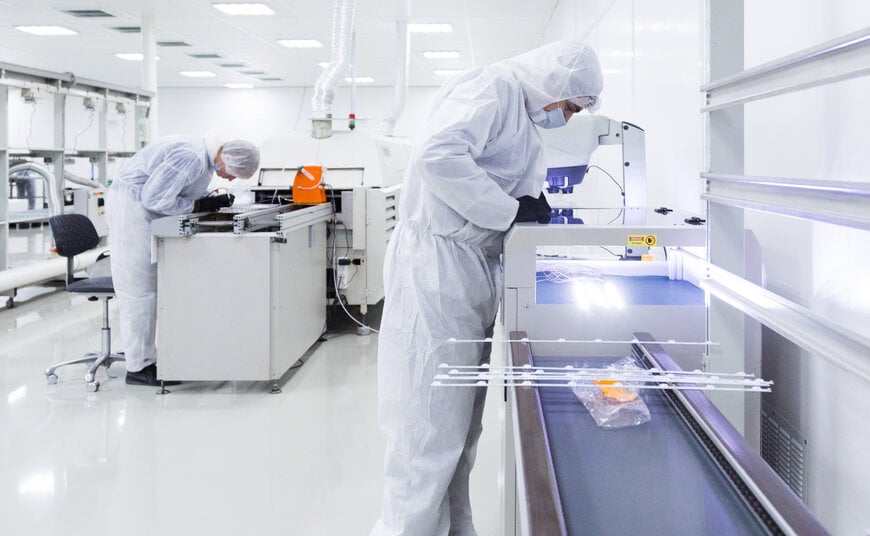
Manufacturing regenerative medicine products at scale requires consistent quality control, reduced manual intervention, and compliance with evolving regulatory standards. In this context, Yokogawa Electric Corporation has established a multi-partner consortium to develop an automated, QbD-based manufacturing platform for regenerative medicine products.
Addressing variability and manual dependency in cell therapy production
Regenerative medicine manufacturing—particularly for cell therapies—remains constrained by batch variability, labor-intensive workflows, and limited standardization. These factors directly affect yield consistency, production timelines, and cost structures, especially when scaling to volumes on the order of 10⁹ cells.
The broader regenerative medicine manufacturing sector, including automation equipment, is projected to grow at an estimated compound annual rate of around 12%, reflecting increasing demand for scalable production systems. However, existing automation solutions often lack the flexibility required to handle diverse cell types and evolving production protocols.
This creates a gap between process development and industrial-scale deployment, particularly for contract development and manufacturing organizations (CDMOs) that must support multiple therapies within a single facility.
Consortium approach to a QbD-driven manufacturing platform
To address these constraints, Yokogawa has formed a consortium involving drug discovery institutions, equipment manufacturers, and IT providers. The initiative focuses on building an automated manufacturing platform based on Quality by Design (QbD) principles, combined with closed-system processing and AI-based control.
The project has been selected under the FY2025 program of the Japan Agency for Medical Research and Development (AMED), within the “Basic Technology Development Project for the Industrialization of Regenerative Medicine and Gene Therapy.” Development is scheduled from December 2025 through March 31, 2028.
At the core of the platform is a modular architecture using fully closed-system bags, designed to reduce contamination risks and enable standardized processing across multiple product types. By embedding QbD methodologies, the system links process parameters directly to final product quality attributes, enabling traceable and reproducible manufacturing workflows.
Quantified targets for quality, cost, and throughput
The platform is designed around measurable improvements in production performance:
- Quality and consistency are addressed through automation and QbD integration, with a target of reducing process deviations by 75% compared to manual methods for large-scale cell production.
- Cost efficiency is targeted through reduced labor requirements and optimized use of culture-related consumables, with an expected reduction of 65% in manufacturing costs by 2028.
- Production flexibility is enabled through a modular system capable of handling multiple drug candidates simultaneously, allowing parallel manufacturing within a single platform.
These targets reflect the need for industrialized cell therapy production systems that can balance scalability with regulatory compliance and product diversity.
Integration into digital supply chain and process optimization
The platform is also positioned within a broader digital supply chain framework, where manufacturing data feeds continuous process optimization. By enabling iterative cycles of design, evaluation, and refinement, the system supports dynamic adjustment of the process design space based on observed quality and efficacy outcomes.
This approach aligns with regulatory expectations for lifecycle process validation and provides a structured pathway for scaling from clinical to commercial production.
Target users include CDMOs, pharmaceutical manufacturers, regenerative medicine developers, and hospital-based cell processing facilities, where demand for flexible, compliant manufacturing infrastructure is increasing.
Path toward deployment and commercialization
Following development within the AMED program, the consortium plans to establish a commercial deployment structure and begin targeting domestic manufacturing organizations.
By combining automation, AI-assisted control, and QbD-based process design, the initiative aims to standardize regenerative medicine production while maintaining the flexibility required for multi-product environments.
Edited by Aishwarya Mambet, Induportals Editor, with AI assistance.
www.yokogawa.com
Integration into digital supply chain and process optimization
The platform is also positioned within a broader digital supply chain framework, where manufacturing data feeds continuous process optimization. By enabling iterative cycles of design, evaluation, and refinement, the system supports dynamic adjustment of the process design space based on observed quality and efficacy outcomes.
This approach aligns with regulatory expectations for lifecycle process validation and provides a structured pathway for scaling from clinical to commercial production.
Target users include CDMOs, pharmaceutical manufacturers, regenerative medicine developers, and hospital-based cell processing facilities, where demand for flexible, compliant manufacturing infrastructure is increasing.
Path toward deployment and commercialization
Following development within the AMED program, the consortium plans to establish a commercial deployment structure and begin targeting domestic manufacturing organizations.
By combining automation, AI-assisted control, and QbD-based process design, the initiative aims to standardize regenerative medicine production while maintaining the flexibility required for multi-product environments.
Edited by Aishwarya Mambet, Induportals Editor, with AI assistance.
www.yokogawa.com

