
www.medical-devices.tech
14
'26
Written on Modified on
Mindray launches AI model for laboratory diagnostic decision support
Qiyuan Lab AI integrates clinical data and sample analysis to improve report accuracy, reduce workload, and support real-time diagnostic interpretation in hospital laboratories.
www.mindray.com

Clinical diagnostics, laboratory medicine, and hospital data integration are increasingly shaped by artificial intelligence capable of linking fragmented datasets into actionable insights. At SMU Shenzhen Hospital, a laboratory AI model developed in collaboration with Mindray has been introduced to improve diagnostic workflows and enhance the interpretation of complex test results.
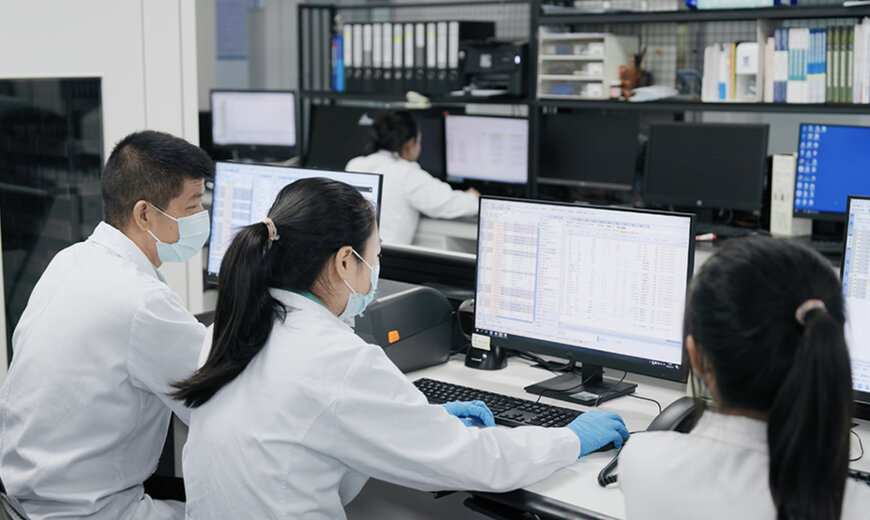
The Qiyuan Lab AI Model is designed to assist laboratory physicians by combining sample visualization with patient data such as ECG results, medical history, and prior laboratory tests. Rather than evaluating samples in isolation, the system contextualizes results within the patient’s broader clinical profile, enabling more informed decision-making.
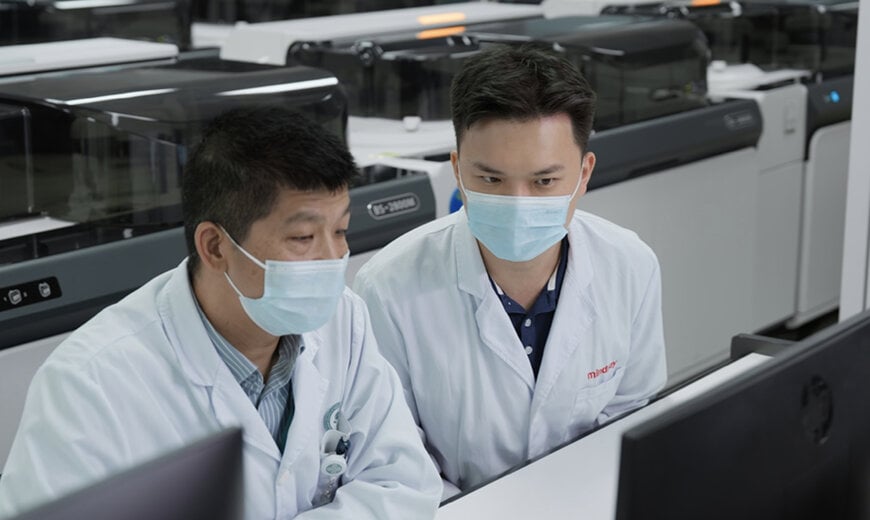
In routine laboratory operations, reviewing abnormal or ambiguous samples can be time-intensive, particularly when data must be gathered from multiple systems. The AI model addresses this by automatically assessing factors such as serum quality and instrument status, while simultaneously incorporating patient-specific information to generate clinical guidance.
Reducing workload through intelligent sample filtering
One of the measurable outcomes of the system is its ability to filter out approximately 30–40% of non-critical samples. This allows laboratory staff to prioritize cases requiring closer attention, improving efficiency without compromising diagnostic quality.
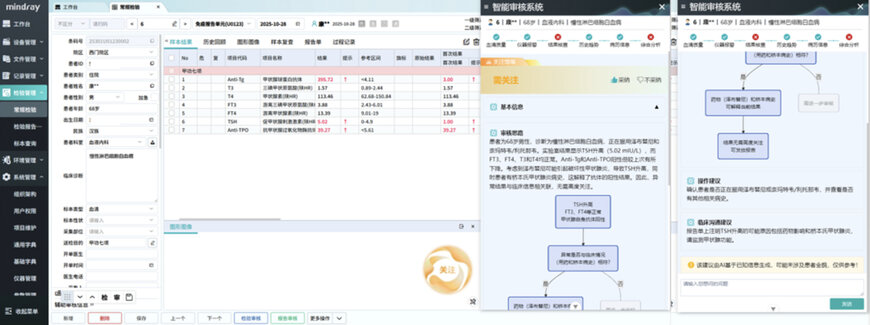
For complex cases, the model highlights relevant findings and suggests possible interpretations. For example, in a case involving elevated thyroid-stimulating hormone (TSH), the system incorporated the patient’s history of chronic lymphocytic leukemia and Hashimoto’s thyroiditis, along with medication data, to indicate that no immediate concern was required while recommending continued monitoring.
This approach reduces the need for manual cross-referencing across multiple hospital systems, a process that previously required significant time and experience, particularly for junior staff.

Enhancing clinical communication and patient interaction
The integration of laboratory and clinical data also supports more direct communication between laboratory teams, clinicians, and patients. As patient awareness and access to health information increase, laboratories are expected to provide not only numerical results but also interpretative insights.
The AI model enables real-time evaluation of cases, such as asymptomatic biomarker elevations, helping guide decisions on whether further testing or observation is necessary. This contributes to more consistent communication with clinicians and more informed responses to patient inquiries.
In practice, laboratory physicians report frequent patient interactions regarding test interpretation. By providing structured analytical support, the system helps standardize responses and improve the clarity of diagnostic reporting.
Training and validation through clinical data collaboration
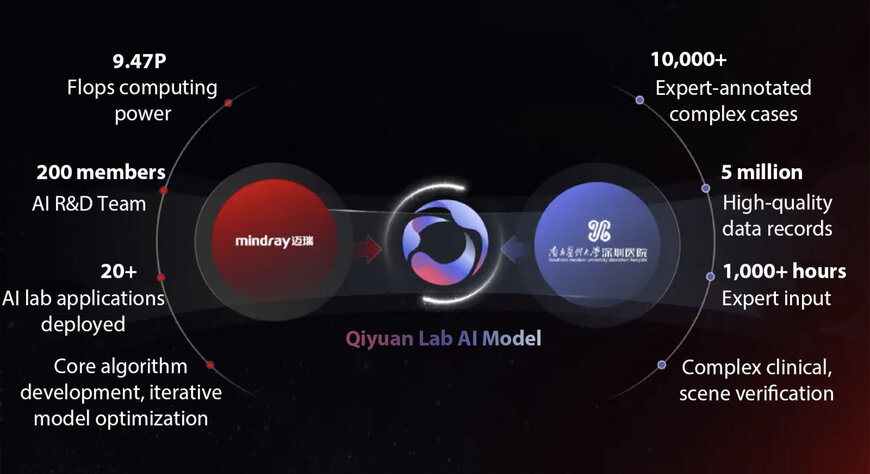
The development of the Qiyuan Lab AI Model is based on a structured training process involving clinical staff. Laboratory professionals manually annotated real sample reviews to build the model’s reasoning capabilities, while additional validation was conducted using more than 10,000 complex cases from multiple partner hospitals.
This dataset-driven approach aligns with regulatory and clinical requirements for safety and reliability in healthcare AI systems. The model is designed to replicate aspects of clinical reasoning by integrating guidelines, literature, and real-world case data.
Supporting precision medicine and long-term monitoring
Beyond immediate diagnostic support, the system enables longitudinal analysis by linking patient data over time. This supports earlier disease detection and more personalized treatment strategies, particularly in chronic disease management.
The integration of laboratory data with inputs from wearable devices further extends its application to continuous health monitoring. This can contribute to cost-effective tracking of key biomarkers and support precision medicine initiatives.
While comparable clinical decision support systems exist, differentiation typically depends on the depth of data integration, the quality of training datasets, and the ability to deliver context-aware interpretations directly within laboratory workflows. In this case, the combination of multi-source data integration and real-time analytical output defines the system’s functional scope.
Edited by Natania Lyngdoh, Induportals Editor — Adapted by AI.
www.mindray.com

