

www.medical-devices.tech
12
'26
Written on
Modified on
CeramTec News
CeramTec at COMPAMED 2026
From November 16-19 in Düsseldorf, Germany, CeramTec presents functional piezoceramics and high-performance structural ceramic components engineered for critical fluid monitoring, ultrasonic actuation, and surgical instrumentation.
www.ceramtec-group.com
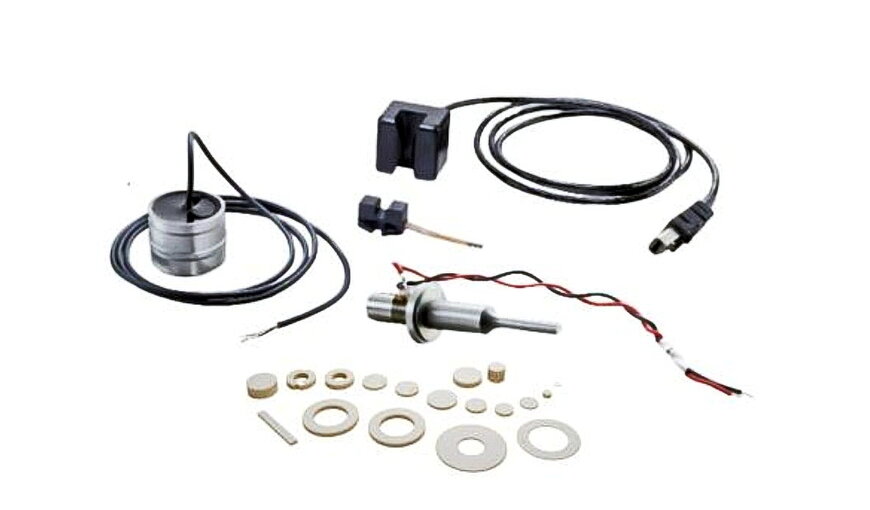
CeramTec will present advanced piezoceramic components, ultrasonic transducers, and structural ceramics for medical technology at COMPAMED, taking place from 16 to 19 November 2026 in Düsseldorf, Germany. The international trade fair showcases upstream solutions across the medical manufacturing chain, where these materials address rigorous reliability, biocompatibility, and precision requirements in active medical devices.
Core Technology and System Architecture
The presented functional ceramics rely on the piezoelectric effect, converting mechanical stress into electrical signals and alternating electrical charges into mechanical displacement. At a system level, these piezoceramic elements function as high-frequency acoustic emitters and sensitive signal receivers. Structural ceramics complement these electro-mechanical assemblies by providing chemically inert, electrically insulating substrates with high mechanical hardness, extreme wear resistance, and dimensional stability under thermal and physical stress. CeramTec maintains integration workflows spanning ceramic powder formulation, green-body machining, sintering, precision metallization, and automated series production.
Deployment and Implementation
Implementation involves matching ceramic microstructure and electromechanical coupling coefficients to device-level operating frequencies and acoustic impedances. Integration covers initial finite element analysis, prototype validation, and scalable clean-environment production. Components interface directly with fluid delivery cassettes, acoustic lenses, and low-noise sensor signal processing electronics across both custom assemblies and standardized medical equipment platforms.
Industry Applications
In dialysis systems and infusion pumps, ultrasonic piezoceramic transducers operate across external tubing to deliver continuous air-in-line detection, preventing air embolisms through non-invasive acoustic transmission analysis. In ultrasonic surgical tools, piezoceramic actuators deliver controlled mechanical oscillations at specified resonant frequencies for precise tissue ablation and coagulation. Structural ceramic components are deployed in surgical handpieces and minimally invasive devices, where miniature geometries require mechanical rigidity, electrical insulation during electrosurgical procedures, and resistance to repeated autoclave sterilization cycles.
Operational Impact and Performance Metrics
Material selection and geometry control directly mitigate acoustic attenuation, sensor drift, and thermal expansion mismatches in sensitive fluidic channels. High mechanical quality factors reduce internal heat generation during continuous ultrasonic operation, preserving component lifespan and signal linearity. Structural ceramic parts maintain micrometer-level geometric tolerances under sustained mechanical wear, eliminating the risk of metallic particle shedding or polymer degradation in surgical environments. Localized manufacturing within Europe ensures traceability of raw materials, adherence to strict regulatory validation schedules, and stable supply-chain pipelines for series equipment manufacturers.
"Particularly in demanding medical applications, it is not the material alone that matters, but the optimal interplay between the material, component design and specific requirements," states Jürgen Brandt, Sales and Business Development Manager Medical Equipment at CeramTec.
Edited by Evgeny Churilov, Induportals Media - Adapted by AI.
www.ceramtec-group.com

