

www.medical-devices.tech
25
'26
Written on
Modified on
Iperf News
iPerf Concludes Successful Trial for Dual-Lumen Femoral Cannula
The novel device prevents limb ischemia during cardiopulmonary support, reporting zero adverse events in its first-in-human trial.
iperfconnecting.com
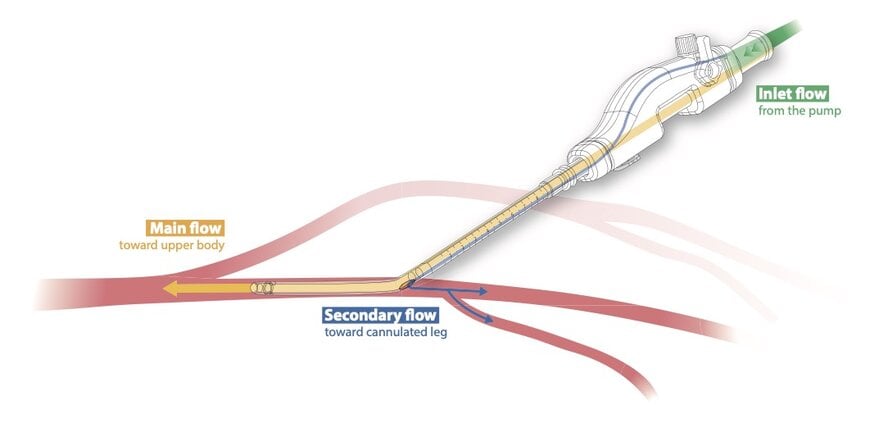
iPerf has successfully concluded the first-in-human clinical trial for its innovative dual-lumen femoral arterial cannula. Designed for cardiopulmonary support, the device was evaluated in 15 patients undergoing minimally invasive cardiac surgery at the Institut de Chirurgie Cardiaque, Hôpital Privé Jacques-Cartier in Massy, France. Led by cardiovascular surgeons Dr. Pierre Demondion and Pr. Fabien Doguet, the trial reported no device-related serious adverse events. Full clinical results will be presented at the upcoming AATS Mechanical Support and Thoracic Transplantation Summit in Toronto on October 2, 2026.
The cannula aims to eliminate limb ischemia, a severe and common vascular complication associated with femoral arterial cannulation during ExtraCorporeal Membrane Oxygenation (ECMO) and CardioPulmonary Bypass (CPB). Throughout the trial procedures, near-infrared spectroscopy (NIRS) monitoring confirmed that tissue oxygenation was continuously maintained in the cannulated limbs, showing no signs of impaired distal perfusion. Developed by iPerf co-founder Pr. Pierre Mordant, the device also features a proprietary positioning system for percutaneous placement, positioning it as the first solution of its kind to proactively mitigate ischemic risks while simplifying surgical workflows.
Additional Context
This section provides clinical and market background not explicitly detailed in the original release.
The physiological challenge of femoral cannulation lies in the sheer size of the catheters required to pump oxygenated blood back into the adult human body during ECMO or CPB. When a traditional, large-bore single-lumen cannula is inserted into the femoral artery, it acts as a physical plug. While it successfully directs high-volume blood flow retrogradely up toward the heart and brain, it simultaneously occludes antegrade flow down the leg. Without blood supply, the lower limb rapidly becomes ischemic, which can lead to compartment syndrome, irreversible nerve and muscle damage, or amputation.
Historically, surgical teams have bypassed this blockage by manually inserting a secondary, smaller "distal perfusion cannula" (DPC) further down the artery to keep the leg alive. This separate intervention requires additional time, surgical skill, and introduces further risks of vascular injury or bleeding. iPerf's dual-lumen technology elegantly solves this by incorporating a secondary channel directly into the primary cannula. As systemic blood is pumped into the body, a calibrated portion of that oxygenated blood is automatically redirected downward into the leg through the same single insertion site. With the global market for cardiopulmonary support projected to reach $2.8 billion by 2032, streamlining this critical safety step has immense potential for intensive care units and emergency off-premises ECMO deployments.
Edited by an industrial journalist, Lekshman Ramdas, with AI assistance.
www.iperfconnecting.com

